How to Choose the Best Solar Storage for Your Home?
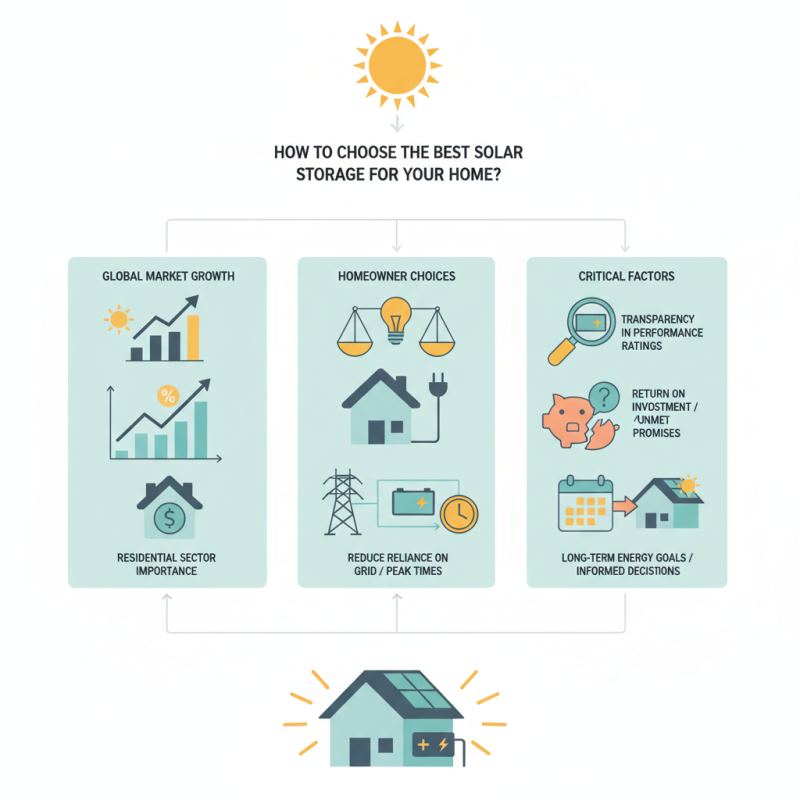
Choosing the right Solar Storage for your home can be challenging. The global solar storage market is expected to grow significantly, with a projected compound annual growth rate (CAGR) of 24% through 2026. This growth indicates the increasing importance of solar energy solutions in the residential sector.
Homeowners are making choices based on energy needs and financial savings. According to the U.S. Department of Energy, energy storage can reduce reliance on the grid, especially during peak times. Yet, many overlook critical factors when selecting solar storage systems. Understanding your energy consumption and how it aligns with solar storage capabilities is key.
It's essential to consider transparency in performance ratings. Not all products deliver on promises. Some may not provide the expected return on investment. Users should also reflect on their long-term energy goals. By doing so, they can avoid frustration over inadequate energy solutions. Making informed decisions can lead to effective use of solar storage in the home.
Understanding Solar Storage Systems and Their Importance
Solar storage systems are essential for maximizing the benefits of solar energy in homes. They enable you to store excess energy produced during the day for use at night. According to the U.S. Energy Information Administration, homes with solar storage can reduce their electricity bills by up to 50%. This capacity to store energy ensures a reliable power supply, even during outages.
When choosing a solar storage system, consider capacity and efficiency. Most systems have different sizes, measured in kilowatt-hours (kWh). A typical home may need between 8 to 12 kWh for day-to-day usage. Look for batteries with a high depth of discharge, as this allows you to utilize a larger portion of the stored energy. The market offers lithium-ion batteries, which tend to have a longer lifespan and better efficiency.
Tip: Assess your energy needs before purchasing. Understand your daily consumption patterns. This will help you select a system that fits well.
Not all storage systems are created equal. Some may offer lower capacity but are cheaper upfront. Be wary of promotions that seem too good to be true. Reliability and support are crucial. Research installation and maintenance costs. Trustworthy providers often have good reviews and track records in the industry.
Tip: Don’t rush. Take time to compare options. A thoughtful approach today could lead to better savings in the future.
Evaluating Your Home's Energy Needs for Solar Storage
Evaluating your home’s energy needs is crucial for selecting the right solar storage. Begin by examining your average energy consumption. According to the U.S. Energy Information Administration, the average American household uses about 877 kWh per month. This figure varies with location, size, and lifestyle. Knowing this baseline helps you determine the capacity required for your solar storage system.
Next, consider your peak usage times. Energy habits vary widely. Some families use more energy in the evening. This influences the type and size of storage you’ll need. If you commonly use high-energy devices, like electric vehicles, your requirements will increase. A report by the National Renewable Energy Laboratory shows that storage systems can help reduce energy bills significantly. However, the cost of installation and maintenance can be a concern. It’s important to weigh the benefits against upfront costs.
Don’t forget to factor in future changes. Will your family grow? Will you add energy-consuming appliances? These future needs can impact your current system choice. Regular assessments of energy use can lead to adjustments in storage solutions. It’s not a one-time decision. Understanding your energy demands requires reflection and adaptation over time.
Types of Solar Storage Solutions Available on the Market
When considering solar storage solutions, it’s vital to understand the options. Lithium-ion batteries are popular for their efficiency. They offer long lifespans and quick charging times. However, they can be costly. Homeowners should weigh their budgets carefully.
Lead-acid batteries are another option. They are less expensive but have shorter lifespans. Maintenance can be tricky. Some people find them heavy and cumbersome. It's essential to think about space and installation requirements.
Pumped hydro storage is less common for home use but may be a good fit for some. It relies on water, which limits locations. There’s also the emerging technology of flow batteries. They offer long discharge times but can be complex. Overall, each type has pros and cons that require careful consideration. Understanding these details can lead to a more informed choice.
How to Choose the Best Solar Storage for Your Home? - Types of Solar Storage Solutions Available on the Market
| Storage Type | Storage Capacity (kWh) | Typical Lifespan (Years) | Typical Efficiency (%) | Cost (USD) |
| Lithium-ion Batteries | 5 - 15 | 10 - 15 | 90 - 95 | 500 - 800 |
| Lead Acid Batteries | 5 - 20 | 3 - 5 | 70 - 80 | 150 - 300 |
| Flow Batteries | 10 - 100 | 10 - 25 | 75 - 90 | 1000 - 3000 |
| Compressed Air Energy Storage | 50 - 500 | 20 - 30 | 60 - 70 | 500 - 1000 |
| Pumped Hydro Storage | 100 - 2000 | 40 - 60 | 70 - 85 | 1000 - 5000 |
Key Features to Consider When Choosing Solar Storage
When considering solar storage for your home, several key features will help guide your decision. Battery capacity is crucial. It determines how much energy you can store for later use. Look for a system that meets your daily energy needs. A good rule of thumb is to choose a battery with at least double your average daily consumption.
Efficiency also plays a large role. This refers to how well the system converts and uses stored energy. A higher efficiency rating often leads to significant long-term savings. Most modern systems fall between 80% to 95%. Lower efficiency can lead to wasted energy and increase costs over time.
Tips: Consider the lifespan of the battery. Some models last only a few years, while others can exceed a decade. Battery warranties can provide insight into expected performance. Additionally, analyze the installation and maintenance requirements. Simple installations can save you time and potential headaches down the line. Not all systems fit every home.
Reflect on your energy needs, preferences, and available space. Don’t rush; take the time to evaluate your options carefully.
Cost Analysis and Long-Term Savings of Solar Storage Systems
When considering solar storage systems, cost analysis is crucial. Initial investments can be significant. Prices may range widely based on capacity and technology. It’s important to evaluate your energy needs. Many homeowners underestimate their storage requirements. This can lead to overspending on unused capacity or shortfalls during peak usage periods.
Long-term savings can offset these upfront costs. Solar storage systems often reduce electric bills significantly. Users report savings that grow over time. However, financial incentives can vary. Some regions offer tax credits or rebates. These can make solar storage more appealing. It's also wise to consider maintenance costs. Regular checks can prevent larger expenses down the road. An informed choice balances immediate costs and potential savings well.
While the benefits are clear, challenges exist. Installation can be complex. Many regions lack qualified installers. This can lead to installation delays. Furthermore, battery technology is evolving rapidly. Homeowners might feel pressed to keep up. New models can emerge soon after purchase, creating uncertainty. Weighing these considerations is vital. The right choice requires careful thought and planning.