How to Choose the Best Commercial Generators for Your Needs?
Choosing the right commercial generators can be daunting. Each business has unique power needs. According to Susan Hartley, a leading expert in the generator industry, "Selecting the right generator is crucial for operational efficiency." Her insight highlights a common challenge faced by many business owners.
When considering commercial generators, assess your specific power requirements. Do you need a constant supply or backup support? Think about your budget and the generator's fuel type. Generators come in various sizes and capacities. Each option presents different advantages and drawbacks.
Sometimes, overwhelming choices can lead to poor decisions. Neglecting details might result in inadequate power supply. It’s essential to weigh your options closely and reflect on your needs. Taking time and effort in this selection is key. After all, a well-chosen generator supports business reliability and growth.
Understanding Your Power Requirements: Assessing wattage and load needs
Assessing your power requirements is crucial when selecting a commercial generator. Start by calculating the total wattage of all equipment needing power. Include both starting and running wattage to ensure your generator can handle peak demands. Many people overlook this step, leading to inadequate power supply.
**Tip:** Create a list of all devices and their wattage. Don’t forget to check the manufacturer’s specifications for accurate numbers.
Next, consider your load needs. Think about the appliances and machines you will run simultaneously. A generator may be strong enough for individual units but fall short under a combined load. This miscalculation could result in power outages or equipment damage.
**Tip:** Factor in a safety margin of 20-30% above your total calculated wattage. This ensures you won’t run at maximum capacity.
Ultimately, reflecting on your needs helps avoid costly mistakes. Ensure your chosen generator aligns with your specific requirements instead of relying solely on general recommendations.
How to Choose the Best Commercial Generators for Your Needs? - Understanding Your Power Requirements: Assessing wattage and load needs
| Generator Type |
Wattage Rating |
Fuel Type |
Run Time (hours) |
Noise Level (dB) |
Best Use Case |
| Portable Generator |
3000W - 6500W |
Gasoline |
8 - 12 |
58 - 70 |
Construction sites, outdoor events |
| Standby Generator |
5000W - 20000W |
Natural Gas / Propane |
Variable (automatic) |
60 - 75 |
Home backup power |
| Inverter Generator |
2000W - 5000W |
Gasoline |
5 - 15 |
50 - 60 |
Camping, RVs, indoor use |
| Diesel Generator |
8000W - 50000W |
Diesel |
8 - 24+ |
70 - 85 |
Industrial applications, large sites |
Types of Commercial Generators: Diesel, propane, and natural gas options
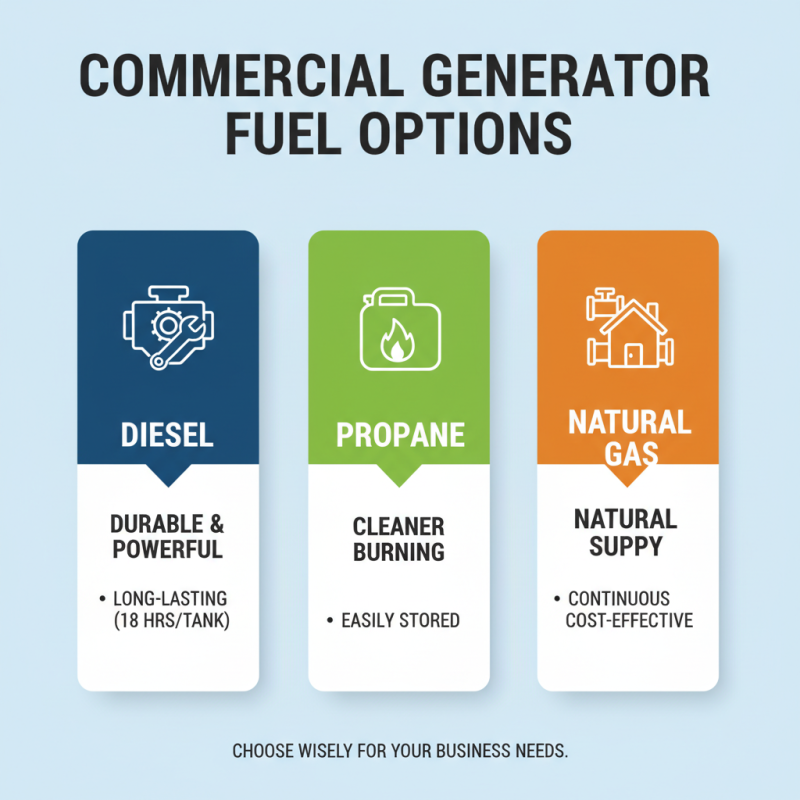
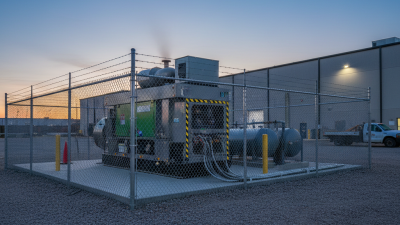
When choosing a commercial generator, understanding fuel options is crucial. Diesel, propane, and natural gas each have unique advantages. Diesel generators are known for durability and power. They run efficiently for long hours and are ideal for heavy-duty applications. In fact, according to industry reports, diesel generators can operate up to 18 hours on a single tank, making them a favorite for construction sites.
Propane generators offer cleaner emissions, which is beneficial for eco-conscious businesses. They are more versatile and can be used in various settings. A pertinent study shows that propane can reduce greenhouse gas emissions by up to 24% compared to diesel. This fact encourages many companies to shift toward greener options.
Natural gas generators, while often cheaper to operate, depend on availability. They provide a steady power supply but may lack the portability of diesel models. This can create a challenge if you need mobility on job sites. Consider your specific needs carefully.
**Tips**: Assess your fuel source options based on location. Availability can affect operational reliability. Always evaluate the cost-effectiveness of each type over time. Moreover, think about how much power you actually need. Being too powerful may waste resources.
Key Features to Consider: Fuel efficiency, noise levels, and portability
When choosing a commercial generator, fuel efficiency is a top consideration. Generators that consume less fuel save money over time. Look for those with advanced technology that maximizes energy usage. A generator with efficient fuel consumption can mean more hours of operation between refuels. This can significantly impact your operational budget, especially for long-term projects.
Another critical aspect is noise levels. Some generators operate quietly, while others can be quite loud. If you work in a residential area or near sensitive environments, consider this factor carefully. Noise pollution can disrupt local communities. Quiet operation can improve your work environment and maintain good relations with your neighbors. Research models that offer low decibel ratings to ensure a peaceful atmosphere.
Portability also matters, especially for commercial uses. A lightweight generator with wheels can make transportation easy. Some may have handles for easy lifting. However, balance portability with power needs. A bigger generator might be less portable but provides more energy. It's not just about getting a generator; it's about finding the right balance for your specific needs. Take the time to weigh your options thoughtfully.
Cost Analysis: Initial investment vs. long-term maintenance and fuel costs
When selecting a commercial generator, understanding costs is crucial. The initial investment can vary significantly. This upfront cost includes the generator itself, installation, and any necessary permits. A higher initial price might suggest superior durability. However, cheaper options could lead to additional expenses later.
Long-term maintenance and fuel costs often eclipse the initial purchase price. Regular servicing is essential to ensure optimal performance. Neglecting maintenance can lead to breakdowns and costly repairs. Fuel expenses also play a big role in overall costs. Some generators are more efficient than others, thus consuming less fuel over time. This efficiency can save money, but research is needed to find the right balance.
Consider how often the generator will be used. If planned for heavy use, investing more upfront may be wise. In contrast, occasional use might justify a lower initial investment. Reflecting on these aspects can lead to a sound decision that balances immediate needs and future expenses.
Top Brands and Models: Reviewing industry leaders based on performance data
When selecting a commercial generator, understanding the top brands is crucial. Performance data reveals that efficiency and reliability often separate the industry leaders from the rest. Leading models are typically assessed through metrics such as power output, fuel consumption, and runtime. These generators often boast a fuel efficiency rating of over 25% compared to older models.
Another important factor is durability. Commercial generators often face various environmental conditions. Reviews indicate that models with weatherproof casings and robust construction perform better over time. Interestingly, user feedback highlights that some brands struggle with maintenance ease. Difficult-to-access components can lead to prolonged downtimes.
Additionally, noise level is a significant concern. Some generators operate at levels exceeding 75 decibels, which can disrupt business operations. The best models typically average around 60 decibels, making them more suitable for noise-sensitive environments. Performance reports note that while advanced features attract buyers, they can complicate repairs. Simple designs often make for more reliable long-term investments. It’s essential to weigh these technical considerations against specific operational needs.