7 Best Ways to Install a Generator Safely?
A generator can restore lights, refrigeration, and essential medical equipment within minutes. Yet poor placement or incorrect wiring can turn that convenience into a deadly hazard. The U.S. Consumer Product Safety Commission has repeatedly warned that portable generators cause carbon monoxide poisoning, fires, and electrocution when used incorrectly. The Centers for Disease Control and Prevention also reports more than 400 unintentional, non-fire carbon monoxide deaths annually in the United States. These figures make safe installation a practical responsibility, not a minor technical detail.
This guide presents seven proven ways to install generator equipment more safely. It covers outdoor positioning, carbon monoxide protection, grounding, transfer switches, fuel storage, weather exposure, and professional inspections. NFPA 70, the National Electrical Code, and NFPA 110 provide widely recognized guidance for generator installations and emergency power systems. Local electrical requirements may differ, so qualified electricians should verify fixed connections and automatic transfer equipment.
Small mistakes matter.
A generator should never operate inside a garage, basement, shed, or enclosed porch, even with doors open. Exhaust can collect near windows, vents, and neighboring properties. Cables also need careful routing, especially across wet grass, walkways, or doorways. I have seen homeowners focus on wattage while overlooking airflow and backfeed risks. That is an easy mistake to make. The safest approach combines manufacturer instructions, recognized standards, suitable equipment, and a realistic inspection of the installation site. Before you install generator systems, consider what could fail during darkness, rain, or panic—not only what works during a calm test.
Choosing the Right Generator Location and Preparing the Site
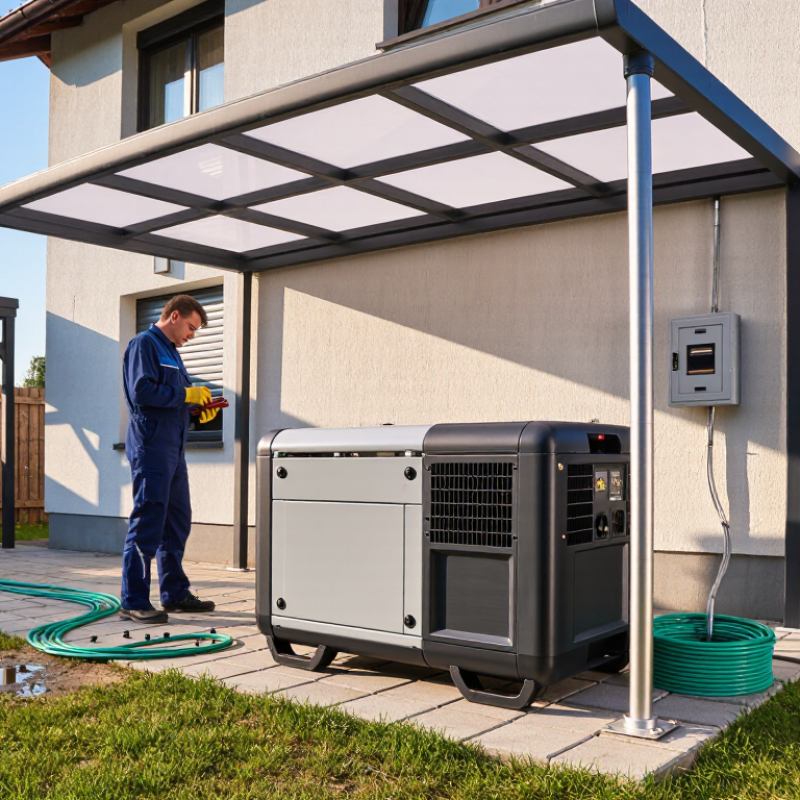
Choosing the right generator location is the foundation of safe operation. Place the unit outdoors, never inside a home, garage, basement, or enclosed shed. Exhaust gases can build quickly and contain deadly carbon monoxide. Keep the generator far from doors, windows, vents, and air-conditioning intakes. Follow local requirements for minimum clearance, which may be around 20 feet in some areas.
The site should be level, dry, and strong enough to support the generator without shifting. Avoid low ground where rainwater collects. A firm, noncombustible surface can reduce vibration and fire risks. Keep leaves, cardboard, fuel containers, and other combustible materials away from the exhaust and engine. Do not place the unit beneath an overhang, even during light rain. Water and electricity are an unsafe combination.
Before installation, inspect the area during different weather conditions. Wind may carry exhaust toward a nearby window. Snow can block ventilation. These details are easy to miss. A weather-resistant cover may help, but it must not restrict airflow or trap heat. Have a qualified electrician install the transfer equipment and verify grounding according to local rules. I would rather delay setup than accept a convenient but unsafe location. Even careful plans need review after the first test run. Listen for unusual vibration, check clearances again, and confirm that exhaust moves away from occupied spaces.
Connecting the Generator Safely Without Backfeeding the Grid
A safe generator installation starts with one rule: never energize a building through a wall outlet. That practice can backfeed the utility grid, leaving lethal voltage on supposedly isolated lines. A listed transfer switch or properly installed interlock must disconnect utility power before generator power connects. A qualified electrician should verify the equipment, grounding method, neutral bonding, and circuit capacity. Never improvise.
The U.S. Consumer Product Safety Commission has reported roughly 100 annual non-fire carbon-monoxide deaths linked to portable generators in recent years. Keep the generator outdoors, at least 20 feet from doors, windows, and vents. Keep it outside. Install carbon-monoxide alarms inside the home, and test them before an outage. Use a weather-protected, correctly rated inlet and cable; damaged cords, loose connections, and undersized conductors can overheat. Turn off large loads before starting the generator, then add essential circuits gradually. A load calculation prevents nuisance trips and dangerous overheating. NFPA guidance also emphasizes maintaining clearances, fuel safety, and transfer equipment for standby systems. In practice, homeowners often focus on wattage and overlook backfeed protection. That is an expensive mistake. Label the main breaker, transfer position, and emergency circuits clearly. Have the installation inspected, and rehearse shutdown procedures while the system is still calm.
Using Proper Cords, Transfer Switches, and Electrical Protection
A generator should stand outdoors, far from doors, windows, and vents. Carbon monoxide can collect indoors without warning. Keep it dry. Use a level surface and protect the unit from rain without blocking airflow. Check the owner’s manual before connecting any load, because generator limits and grounding instructions differ.
Choose heavy-duty, outdoor-rated cords with intact insulation and grounded plugs. Match each cord to the generator’s output and the appliance’s current demand. Never use damaged cords, household extension cords, or connected “daisy chains.” Keep plugs and connections above wet ground. A cord should feel warm at most, never hot. That small detail is easy to ignore. It should not be.
A properly installed transfer switch can separate generator power from utility power. This prevents dangerous backfeeding through household wiring. Have a qualified electrician install and inspect it, especially when supplying fixed circuits. Use circuit breakers and ground-fault protection where required, then test those devices regularly. Connect only essential loads, starting with the largest motor-driven appliance separately. Avoid overloading the generator, even briefly. I would also label the selected circuits, since stress and darkness make memory unreliable. Before refueling, shut the generator down and let it cool. Inspect cords, plugs, and grounding connections before every use. If anything seems unclear, stop and seek professional advice rather than improvising.
Managing Fuel, Ventilation, Weather, and Carbon Monoxide Risks
7 Best Ways to Install a Generator Safely?
Place the generator outdoors, at least 20 feet from doors, windows, and vents. Keep its exhaust pointed away from the building. Never operate it in a garage, shed, porch, or enclosed space.
Carbon monoxide is invisible, odorless, and potentially fatal. Install working carbon monoxide alarms inside the home. Test them regularly, especially before severe weather. One alarm is not enough for larger homes.
Keep fuel in approved, labeled containers away from heat, flames, and living areas. Turn the generator off and let it cool before refueling. Wipe up spills immediately. Inspect the fuel line, cap, and connections for leaks.
Use outdoor-rated cords with intact insulation. Connect only the equipment the generator can safely support. A qualified electrician should install a transfer switch. Improvised connections can send electricity into utility lines.
Protect the generator from rain and snow without blocking airflow. A raised, ventilated cover can help, but ordinary plastic sheets may trap heat. Keep the unit stable on a dry, level surface.
Check weather conditions before starting it. During an outage, people often rush and miss small warning signs. That mistake is understandable, but it remains dangerous. Follow the operating manual and local electrical requirements, even when the setup seems simple.
Testing, Operating, and Storing the Generator Responsibly
Testing, Operating, and Storing the Generator Responsibly
A generator is safest when its routine is treated like equipment maintenance, not an emergency shortcut. Before testing, place it outdoors, well away from doors, windows, and vents. Carbon monoxide can collect indoors within minutes. Inspect the fuel line, frame, exhaust, and power cord for cracks, leaks, or heat damage. Keep the unit dry, and connect appliances only through properly rated cords or a professionally installed transfer system. Never connect it directly to household outlets.
Run a short test each month, preferably under a moderate load. Check for unusual vibration, unstable power, smoke, or a sharp fuel smell. Let the engine warm up before adding appliances, then remove loads before shutting it down. A portable light, refrigerator, and sump pump may not start smoothly together. I once assumed a quiet engine was healthy, but a loose connection caused intermittent power. That mistake changed my inspection routine. Test carbon monoxide alarms near sleeping areas, too.
Storage needs the same care. Turn the generator off, let it cool completely, and keep fuel away from flames and living spaces. Follow the operating manual when draining fuel or using approved stabilizer. Store the machine in a dry, ventilated location, protected from rain and standing water. Inspect the battery, oil level, and cords before the next test. Keep a written log; small omissions become serious during storms. I still miss details occasionally, so a checklist remains more reliable than memory.