How to Choose the Best Home Backup Generators for Your Needs?
When it comes to home backup generators, choosing the right one can be daunting. These devices ensure that your home remains powered during outages. According to a report from the U.S. Energy Information Administration, power outages cost U.S. businesses and households billions each year. As the need for reliable energy grows, more people are turning to home backup generators.
Industry expert John Smith, a recognized authority in energy automation, states, "Selecting the perfect generator can enhance your home’s resilience." His insight underscores the importance of understanding your specific energy needs. The variety of options available today adds to the challenge. Some generators are portable, while others are standby units.
You must also consider fuel type, wattage, and runtime. Each factor plays a role in usability and efficiency. However, many consumers overlook these details. This oversight could lead to regret after a critical outage. Clarity in your requirements can guide your decision, preventing common mistakes. Ultimately, a well-informed choice in home backup generators will grant peace of mind during unexpected events.
Understanding Your Power Needs and Requirements
When choosing a backup generator, understanding your power needs is crucial. Consider your home’s critical appliances. Refrigerators, heaters, and medical devices often top the list. Calculate their wattage. This gives you a clearer picture. You want to avoid overloading the generator. That could lead to frustrating breakdowns during outages.
Think about runtime too. A generator can't just deliver power; it needs to last. How long do you typically experience outages? Some last just a few hours, while others can stretch into days. It might be useful to list your power requirements. A simple chart can help visualize everything. Don’t underestimate the importance of these details.
Also, reflect on your budget. Quality generators can be an investment. You might face higher costs for the most reliable models. However, cutting corners can lead to problems later. Make your choices based on careful thought. A rushed decision may leave you regretting your selection when the lights go out.
Types of Home Backup Generators Available on the Market
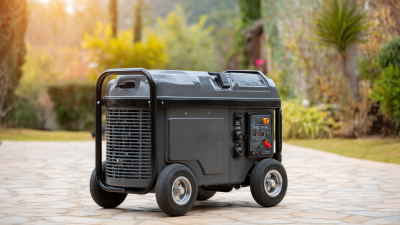
When it comes to home backup generators, understanding the types available is crucial. There are three main categories: portable generators, standby generators, and inverter generators. Portable generators are versatile and easy to transport, making them great for short-term use. They often power essential appliances during outages. However, their fuel consumption can be high.
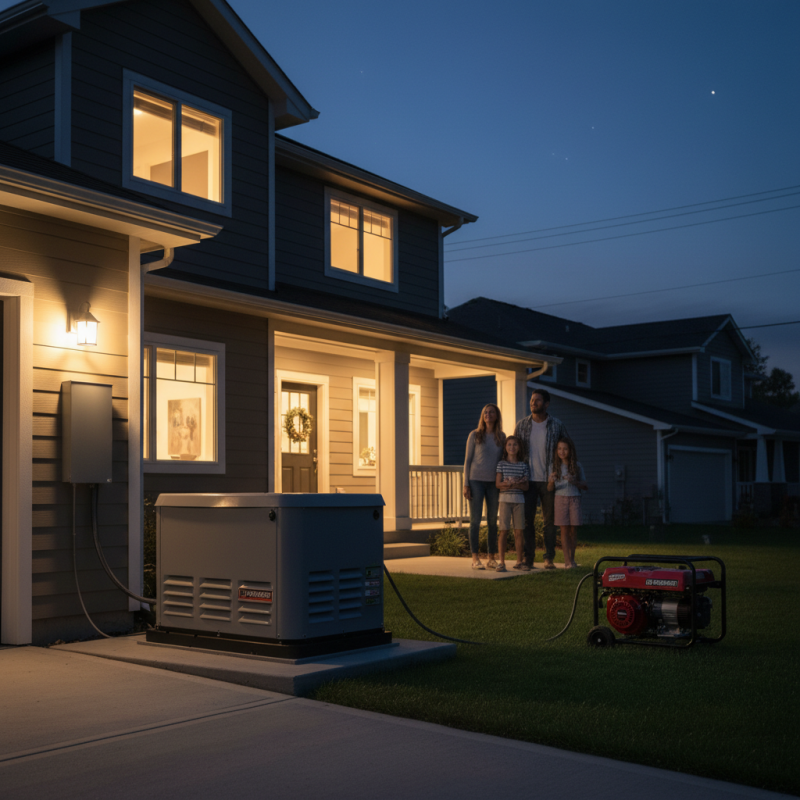
Standby generators, on the other hand, are permanently installed and connect to your home’s electrical system. They automatically turn on during outages. Although they provide seamless power, installation costs can be considerable. You need to evaluate how much backup power you might actually require.
Inverter generators are known for their clean energy output. They are quieter and more efficient than traditional models. Yet, their capacity may be limited compared to others. It's important to determine what devices you want to keep running.
**Tips:** Consider your energy needs carefully. Keep a list of the essential appliances. Compare your options on noise levels and fuel efficiency. Always think about where you will store the generator. Make a plan that suits your lifestyle and budget.
Home Backup Generators Power Output Comparison
Key Features to Consider When Selecting a Generator
When selecting a home backup generator, several key features demand attention.
Power output is critical. Most households need
between 5,000 and 8,500 watts to keep essentials running during an outage.
According to the U.S. Department of Energy, around 60% of residential generators
fall within this range. Assessing your wattage requirements ensures that you choose a generator
capable of supporting your appliances.
Fuel type is another significant factor.
Generators typically run on gasoline, propane, or natural gas. Each fuel has its pros and cons.
Gasoline offers convenience but has a shorter shelf life.
Propane is more stable, yet it requires storage space.
Natural gas provides continuous supply,
but installation costs may be higher. Nearly 35% of users prefer propane for its reliability during extended outages.
Noise level can heavily affect the usability of a generator.
Many current models generate 60 to 75 decibels of sound. This can be disruptive, particularly in
quiet neighborhoods. Consider the distances between homes when evaluating this aspect.
Additionally, the generator's portability matters. Some units weigh over 200 pounds.
Transporting these can be a challenge without assistance.
Reflecting on these features is essential for making the right choice tailored to your needs.
Evaluating Fuel Types and Efficiency for Your Backup Generator
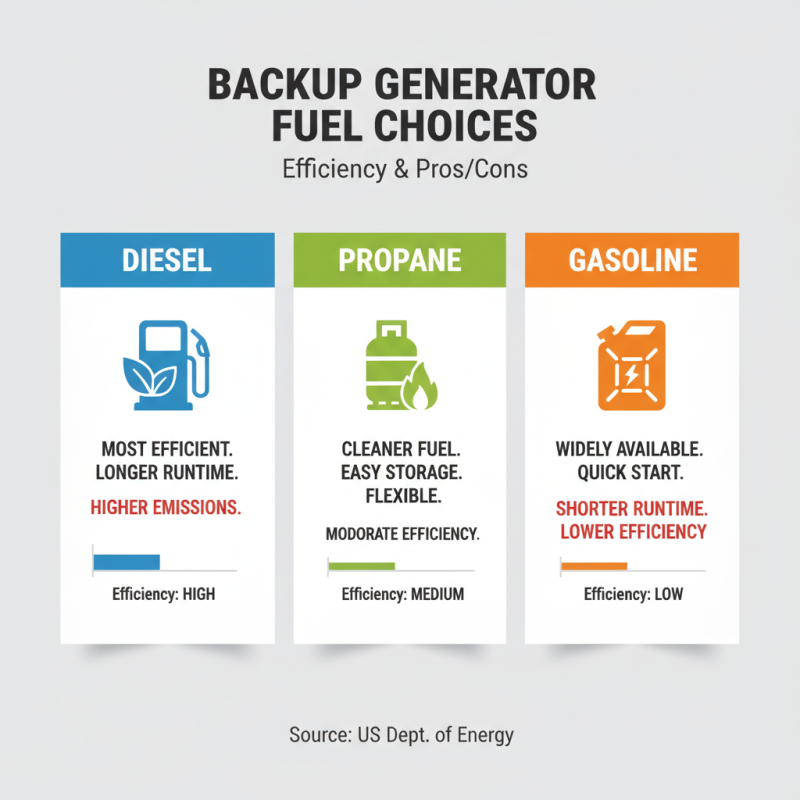
When choosing a backup generator, fuel type and efficiency are crucial factors. Gasoline, propane, and diesel are common fuel options. Each has its pros and cons. According to the U.S. Department of Energy, diesel generators are the most fuel-efficient but may come with higher emissions. Gasoline generators are widely available but provide shorter run times. Propane is cleaner and offers storage flexibility, making it a popular choice.
Many users overlook the importance of fuel efficiency. It’s essential to evaluate how long a generator runs on a specific fuel type. Knowing the average run times can save you money in the long run. For instance, a propane generator can last up to 50% longer than a gasoline model, contributing to cost savings.
Tips: Consider your area’s fuel availability. In a severe storm, gas stations may close. Also, contemplate how often you'll use the generator. If it’s only for emergencies, a less efficient model may suffice. Finally, research fuel storage regulations to ensure you comply with local laws. These details greatly affect your generator choice and overall efficiency.
Budgeting for Purchase, Installation, and Maintenance Costs
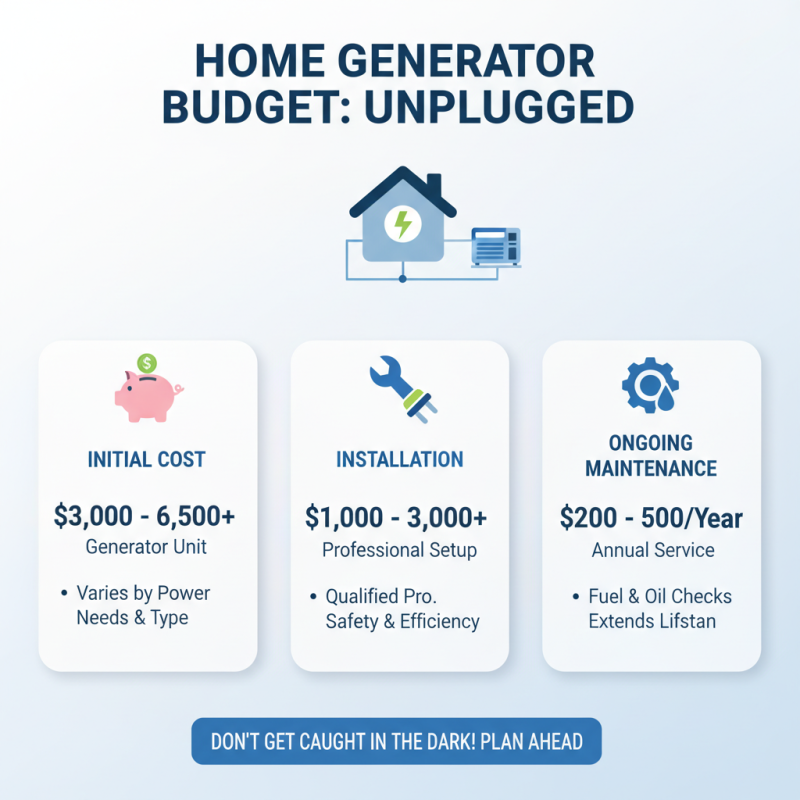
When budgeting for a home backup generator, consider initial costs, installation, and ongoing maintenance. The average cost of a home generator ranges from $3,000 to $6,500. This price can vary based on your power needs and generator type. Many homeowners underestimate installation costs, which can add an additional $1,000 to $3,000. Proper installation by a qualified professional is crucial for safety and efficiency.
Maintenance is another significant expense often overlooked. Regular servicing is necessary to ensure reliability during outages. According to industry reports, annual maintenance can cost between $100 and $300. Neglecting maintenance can lead to more severe problems and higher repair costs later. Some experts suggest setting aside around 10% of your generator’s purchase price annually for maintenance.
Understanding all these costs upfront helps avoid financial strain when faced with an outage. Many people assume that the purchase price is all they need to focus on, but installation and upkeep are vital. Planning for these financial aspects ensures your generator serves you well when you need it most.