China Best Home Generators How to Find Reliable Suppliers?
Choosing reliable suppliers for home generators requires more than comparing prices on a product page. A dependable supplier should explain generator capacity, fuel options, automatic transfer switches, installation requirements, and maintenance intervals clearly. Aaron Jagdfeld, former Generac president and chief executive officer, has said, “Power outages are not a matter of if, but when.” That practical warning changes how buyers should evaluate suppliers. The cheapest unit may become expensive when replacement parts are unavailable or technical support disappears.
Look for suppliers with documented factory quality controls, relevant certifications, transparent warranties, and a proven service network. Ask for specific evidence. Can the supplier provide load-test records? Are spare control boards available locally? Does the warranty cover labor, or only components? A reliable company should answer without vague promises. It should also recommend a generator based on actual household demand, including refrigerators, medical equipment, pumps, heating systems, and internet devices. Oversizing wastes fuel, while undersizing can overload the system.
Experience matters here. A supplier that has installed generators in humid coastal areas may understand corrosion better than a general online reseller. Request references from comparable homes, not only large commercial projects. Check delivery timelines, after-sales training, and emergency response procedures. No supplier is perfect. Even respected brands can experience delays or communication problems. That is worth acknowledging. The strongest choice combines verified product quality, competent installation partners, accessible parts, and honest limitations. For buyers seeking dependable home generators, trust should be measured through evidence, service records, and consistent technical answers.
Define Generator Needs Using ISO 8528-5 Performance Classes
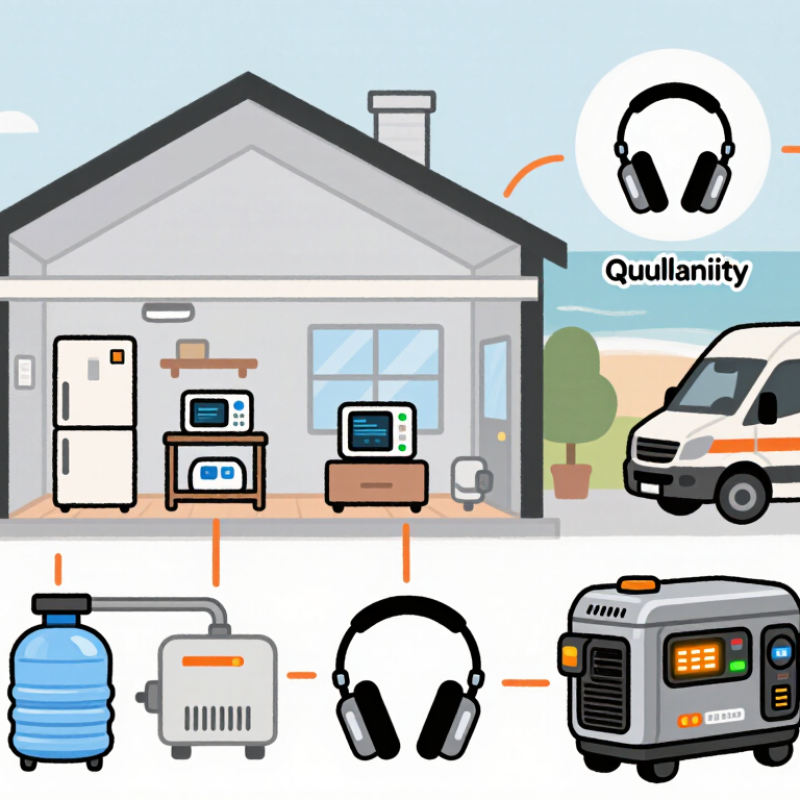
When searching for China’s best home generators, begin with the load, not the supplier’s sales description. ISO 8528-5 performance classes help define what the generator must handle. Class G1 suits basic loads, such as lighting and simple heating equipment. Class G2 supports common household systems with moderate voltage and frequency demands. Class G3 is better for sensitive equipment, including pumps, control systems, and some medical devices. Class G4 applies to highly demanding installations, but it is less common in ordinary homes.
Ask suppliers to identify the tested performance class clearly. Request test records showing voltage recovery, frequency recovery, and response during sudden load changes. A reliable supplier should explain the test conditions, load percentage, ambient temperature, and measurement method. Product data should also separate standby power from prime power. These ratings are not interchangeable. Confirm the generator’s output at your actual altitude and temperature.
Look for practical evidence. Ask whether the unit was tested with a refrigerator, water pump, and heating load connected together. Check the transfer switch delay and the controller’s fault records. A factory video can help, but it is not independent proof. I have seen attractive specifications hide weak performance during motor starting. That detail is easy to miss.
Supplier reliability also depends on documentation. Review wiring diagrams, maintenance intervals, spare-part support, and warranty procedures before ordering. An ISO reference alone does not prove every model meets the claimed class. Independent inspection may cost more, yet it can reveal unstable frequency or poor cooling design before shipment. A careful buyer should challenge unclear figures, even when the quoted price looks excellent.
Verify China Suppliers’ ISO 9001 and IEC 60034-1 Compliance
Rising backup-power demand makes supplier verification more important than attractive product photos. The IEA’s Electricity 2024 report says global electricity demand grew 2.2% in 2023. It forecasts average annual growth of 3.4% from 2024 to 2026. That pressure can reward speed over control. Do not accept a scanned certificate alone.
Ask for the complete ISO 9001 certificate, including its certification body, scope, factory address, and expiry date. ISO Survey 2022 recorded 1,265,216 ISO 9001 certificates worldwide, but certification numbers do not prove generator quality. The scope should cover design, production, testing, and after-sales processes for the exact facility. Contact the issuing certification body through its official channel. Check whether the address matches the production site. Small mismatch.
For IEC 60034-1 compliance, request recent type-test or routine-test reports from an independent laboratory. Verify the generator model, rated power, frequency, voltage, temperature-rise limits, and test date. A laboratory accredited to ISO/IEC 17025 provides stronger evidence of technical competence. Ask for calibration records behind the measurements. Paperwork still has blind spots. A factory may pass one test while showing weak process control later. During a remote audit, inspect winding areas, insulation storage, final inspection stations, and serial-number records. Require traceable samples before placing a large order.
Evaluate Factory Capacity, MOQ, Lead Times, and Quality-Control Data
Reliable home-generator suppliers reveal themselves through verifiable operating data, not polished catalogues. During factory audits, check active assembly lines, load-bank capacity, test-bench numbers, and monthly output records. Ask whether capacity includes peak overtime. It often does. A supplier quoting 10,000 units monthly should show purchase orders, staffing levels, and recent shipment records. The World Bank’s 2023 Logistics Performance Index evaluates 139 economies using tracking, logistics competence, and delivery timeliness. Request the same evidence from your supplier.
MOQ and lead time require separate negotiations. Confirm the minimum order for standard units, customized panels, and spare parts. Then request a written production schedule with component availability and inspection points. UNCTAD’s Review of Maritime Transport 2023 states that over 80% of global trade by volume moves by sea. Port congestion can therefore change an apparently short lead time. Ask for both factory lead time and door-to-door delivery time. A vague “fast delivery” promise is not useful.
Quality-control data should include first-pass yield, final defect rate, warranty claims, and corrective-action records. Request sample inspection reports, serial-number traceability, calibration certificates, and fuel-consumption results under defined loads. ISO 9001 certification supports process discipline, but it does not prove generator performance. Compare three months of data, not one impressive sheet. Data can still be selective. A pilot order, independent pre-shipment inspection, and documented acceptance criteria reduce that uncertainty.
Compare Warranty Terms, Load-Test Reports, Spare Parts, and Total Cost
China’s Best Home Generators: How to Find Reliable Suppliers?
A reliable supplier should provide more than attractive pricing. Ask for a written warranty that states coverage, labor limits, response times, and exclusions. Check whether the warranty begins at shipment or installation. That difference matters. I once reviewed a quotation with a five-year warranty, but critical electronic parts were covered for only twelve months. The wording looked impressive. The details were weaker.
Request recent load-test reports from an independent laboratory or a clearly identified testing department. The report should show rated output, fuel consumption, voltage stability, noise levels, and performance under changing loads. A generator tested only at no load tells you little. Ask for serial-number references and test dates. Documents can be polished. Verification is essential. If a supplier refuses reasonable checks, treat that as useful information.
Spare parts deserve equal attention. Confirm availability for filters, control modules, sensors, belts, and starter components. Ask for prices and delivery times before placing an order. A low purchase price can become expensive when one small part waits six weeks. Calculate the total cost, including freight, installation, maintenance, fuel use, training, and possible downtime. Use a simple spreadsheet. My own estimates have sometimes missed local service charges, so leave room for uncertainty. A dependable supplier answers clearly, shares evidence, and accepts practical questions without pressure.