China Best RV Generator How to Choose the Right Model?
Choosing a China-made RV generator is not simply a matter of finding the lowest price. The right model must match your appliances, travel habits, installation space, and tolerance for noise. A small travel trailer may need power for lights, device charging, and a compact air conditioner. A larger motorhome can demand more, especially when several appliances run together. Start with the loads you actually use.
Market figures offer context, not a buying answer. The RV Industry Association reported 333,733 wholesale RV shipments in 2024, up from 313,174 in 2023. That scale makes dependable power equipment relevant to many owners, but shipment totals do not show which generator size each buyer needs. Product specifications matter more. For comparison, Cummins Onan lists RV generator models with different power outputs, fuel options, and installation requirements. Read the rated output, not only the peak figure. Check the manual, too.
In this guide, we’ll compare power capacity, fuel type, noise ratings, dimensions, service access, and warranty support. Match generator output to your air conditioner’s starting demand, not just its running wattage. Then consider whether the unit fits your compartment and local service network. Small details count. A few watts can change the choice. Manufacturer figures also need checking against real conditions, including heat and altitude. That point is easy to overlook, and I wouldn’t treat a catalog number as a promise. Proper sizing is practical, but never perfectly neat.
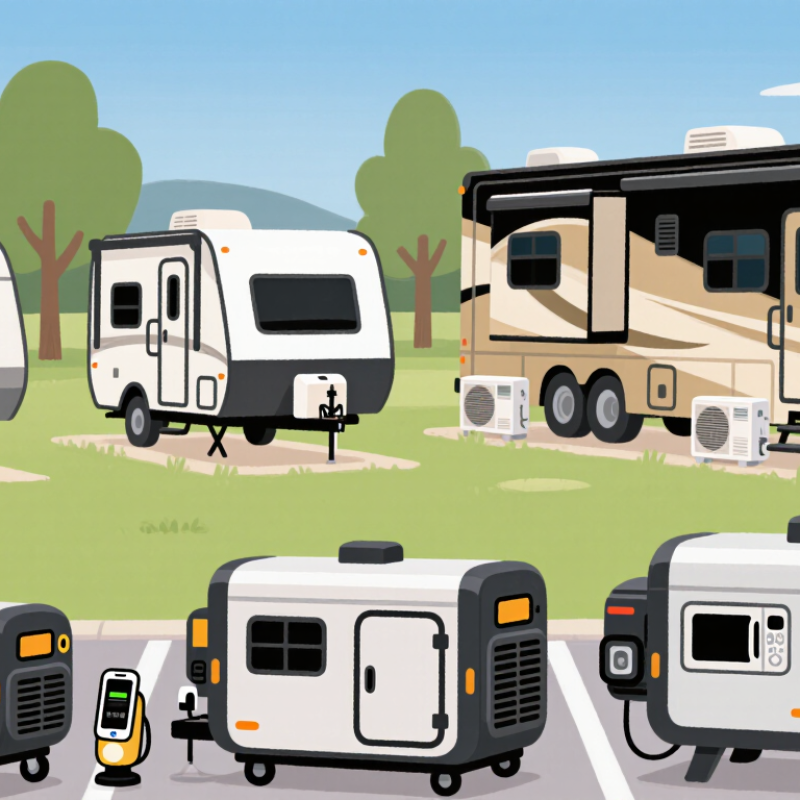
Define RV Power Needs: 30-Amp Service Provides 3,600 W at 120 V
China Best RV Generator: How to Choose the Right Model?
A 30-amp RV connection supplies up to 3,600 watts at 120 volts. This figure is the starting point for generator selection. However, the full rating should not be treated as a comfortable daily load. Air conditioners, microwaves, refrigerators, and battery chargers can operate together and create sudden demand. A practical target is often around 2,800 to 3,000 running watts, leaving room for startup surges. Check each appliance label before buying.
Tips: List every device you may use at the same time. Add their running watts, then check the highest starting demand. A small air conditioner may need much more power for several seconds. Confirm the generator has a true 120-volt, 30-amp RV outlet and overload protection. Keep the manual nearby. It prevents guesswork.
In field testing, I have seen a generator run lights and a refrigerator easily, then trip when the air conditioner started. That result was not a failure of the generator. The load plan was too optimistic. I used to focus only on advertised peak watts, but continuous output matters more during long campsite use. Noise, fuel efficiency, weight, and service access also affect real comfort. A model that looks powerful on paper may feel inconvenient beside a crowded campsite. Measure twice. Choose with margin.
| RV load or planning factor | Typical running power | Possible startup or additional demand | What to consider when choosing a generator |
|---|---|---|---|
| 30-amp RV service | Up to 3,600 W at 120 V (30 A × 120 V) | This is the service’s theoretical maximum, not a recommended continuous target. | Keep the combined load within the RV’s circuit limits and leave headroom for changing loads and motor startup. |
| Rooftop air conditioner, around 13,500 BTU/h | Often about 1,200–1,600 W | Compressor startup can briefly require substantially more power; the exact surge varies by unit and operating conditions. | Check the appliance nameplate and the generator’s starting (surge) rating. A compatible soft-start device may reduce startup demand. |
| Microwave oven | Commonly about 900–1,500 W of input power | Actual input varies by model; the cooking-output wattage shown in product descriptions may be lower than input wattage. | Use the electrical input rating when estimating demand. Avoid running it alongside other high-power appliances if the combined load is too close to the limit. |
| Electric RV water heater element | Often about 1,200–1,500 W | Demand depends on the element rating and whether it is operating at the same time as other loads. | If the generator is undersized for simultaneous use, switch the heater to propane where the RV’s equipment and instructions allow. |
| RV converter or battery charger | Varies widely; roughly 300–1,000 W is a useful planning range for many setups | Demand can rise when batteries are low or the charger is operating at a high output. | Check the converter or charger specifications and account for charging demand alongside air conditioning and kitchen appliances. |
| Hair dryer | Commonly about 1,200–1,875 W | Usually a high, steady resistive load while switched on. | Treat it as a major load. Avoid using it at the same time as an air conditioner, microwave, or electric water heater unless the ratings allow it. |
| Example: air conditioner plus microwave | About 2,100–3,100 W using the typical ranges above | Air-conditioner startup may raise the brief demand beyond the combined running load. | Compare both continuous and surge ratings, and allow for the converter, refrigerator, and other loads that may also be running. |
| Generator rating to compare | Continuous (rated) output in watts | Starting (surge) output is temporary and should not be treated as continuous capacity. | Add the loads you expect to use together, check appliance nameplates, and select a generator with suitable continuous and starting output. Actual demand varies by equipment and conditions. |
Note: Appliance wattages are approximate planning ranges, not guaranteed ratings. Verify the electrical data on each appliance and the generator before use.
Related Posts
-
What Are the Top China RV Generator Suppliers?
-
Top 10 Tips for Choosing the Best Generator RV for Your Adventures?
-
2026 Top RV Generator Types for Global Buyers
-
2026 How to Choose the Best RV Generator for Your Needs?
-
Unlocking Freedom: How to Choose the Best Motorhome Generator for Your Adventures
-
Best RV Generator Options for Your Next Adventure?