7 Tips for Choosing the Best Small Generator?

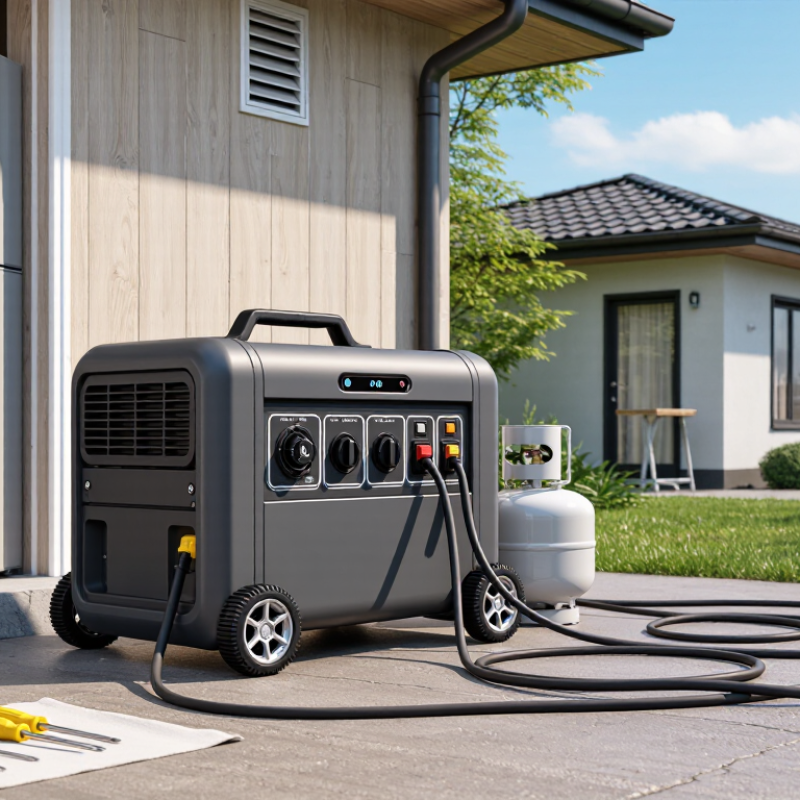
Choosing the best small generator is not simply a matter of comparing prices or advertised wattage. A dependable choice must match your real power needs, available space, fuel habits, and safety conditions. Susan Orenga, executive director of the Portable Generator Manufacturers’ Association, emphasizes, “Portable generators must be operated outdoors, away from doors, windows, and vents.” That warning deserves attention, especially during storms, when rushed decisions can create serious risks.

This guide explores seven practical tips for selecting a small generator with greater confidence. You will learn how to calculate running and starting watts, compare inverter and conventional designs, and assess fuel efficiency. Noise matters, too. A model rated at 60 decibels may feel acceptable beside a garage, but harshly loud near a bedroom. Small details become important.

Look for clear controls, protected outlets, overload protection, and accessible maintenance points. Check whether the generator can start your refrigerator, sump pump, or essential medical equipment. A model that runs lights may fail when a motor starts. That mistake is common.

Fuel storage also deserves honest thought. Gasoline can degrade, while propane may offer longer storage but lower output. No option is perfect. Your priorities may change after one power outage.

The right small generator should provide useful power without becoming difficult to store, maintain, or operate. This article offers practical guidance, but product manuals and local electrical professionals remain essential references. Safety should never be an afterthought.
7 Tips for Choosing the Best Small Generator?

Define Your Power Needs and Identify Essential Appliances

7 Tips for Choosing the Best Small Generator

Define Your Power Needs and Identify Essential Appliances

Choosing a small generator starts with a realistic power inventory, not a guess. Imagine a winter outage at 8 p.m. List the appliances that protect safety, food, communication, and comfort. A refrigerator, freezer, medical device, modem, lights, and sump pump may matter most. A toaster and hair dryer can wait.

Read each appliance’s rating label or instruction manual. Record running watts, then check the starting watts for motors and compressors. Refrigerators and pumps often need a short surge that is several times higher than their normal demand. Add the running watts of appliances used together. Do not simply add every device in the house.

A simple worksheet helps expose weak assumptions. For example, a refrigerator using 700 starting watts, a pump using 1,000, and lights using 100 already require careful sizing. Leave a safety margin of about 20 percent, because labels can be incomplete and household use changes. My own planning would probably overestimate lighting and underestimate pump demand. That is worth questioning.

Choose which appliances can share the generator’s capacity. You might run the refrigerator and modem continuously, then operate the pump briefly. Never connect a portable generator directly to household wiring. A properly installed transfer switch and guidance from a qualified electrician can prevent dangerous backfeeding. Test the selected load outdoors before an emergency, with extension cords rated for the equipment and distance.

Compare Generator Types, Fuel Options, and Portability

7 Tips for Choosing the Best Small Generator

Tip 1: Compare generator types before checking prices. An inverter generator usually runs more quietly and produces stable electricity for laptops, medical devices, and other sensitive equipment. A conventional generator may provide higher output for less money, but it often weighs more and sounds louder. Check running watts, not only peak watts. Starting a refrigerator can briefly demand much more power.

Tip 2: Choose fuel based on storage and availability. Gasoline is convenient, but it can degrade during long storage and may require careful maintenance. Propane stores longer and burns cleaner, although cold weather can affect performance. Dual-fuel models offer flexibility, but their extra components may increase weight and maintenance needs. I once focused too much on fuel cost and overlooked runtime. That was a poor trade-off.

Tip 3: Treat portability as a daily concern. Look for a balanced frame, strong handles, and wheels that roll over gravel. A generator that weighs 70 pounds may be portable in theory, but awkward stairs can change your opinion quickly. Measure your storage space before buying. Also check noise ratings and exhaust requirements. Use any fuel-powered generator outdoors, far from doors and windows. Small does not mean effortless. Test the starting method, inspect the controls, and estimate how often you can perform basic maintenance.

7 Tips for Choosing the Best Small Generator

Compare generator types, fuel options, output, noise, and portability before buying. The chart uses representative mid-range specifications for common small portable generators; exact values vary by model.

Inverter generators are generally lighter and quieter, making them suitable for camping and sensitive electronics. Conventional gasoline units usually provide higher output for the weight, while dual-fuel models offer greater fuel flexibility because they can run on gasoline or propane.

Check Wattage Ratings, Runtime, and Fuel Efficiency

7 Tips for Choosing the Best Small Generator?

Wattage ratings should guide every purchase. The U.S. Energy Information Administration reported average U.S. household electricity use of 886 kWh per month in 2022. That equals roughly 1.2 kilowatts continuously, but appliances need extra starting power. A refrigerator, sump pump, and microwave can briefly exceed their running-watt totals. Add each appliance’s running watts, then include the highest startup demand. Do not trust a single “maximum watts” figure. Continuous output matters more.

Runtime is equally practical. A generator rated for ten hours may achieve that result at a light 25% load. At 75% load, operation can fall sharply. The U.S. Department of Energy notes that fuel consumption rises with electrical demand, although efficiency varies by engine and load. Compare runtime at the same load percentage, not different test conditions. Fuel efficiency should be measured in watt-hours per gallon, when available. More usable electricity per gallon means fewer refueling breaks.

Check the manual, too. Fuel storage limits, maintenance intervals, and low-oil shutdown affect real-world reliability. I have found that people often buy for the largest appliance, then run small loads inefficiently. That mistake is easy to make. Leave a margin of about 20% above your calculated demand, because cold starts and motor surges are unpredictable. Independent testing reports are useful, but test conditions still deserve scrutiny. A quiet, efficient unit is not automatically the best choice if its rated output cannot support your actual essentials.

7 Tips for Choosing the Best Small Generator: Check Wattage Ratings, Runtime, and Fuel Efficiency

Tip Selection Area What to Check Practical Guideline Why It Matters
1 Calculate Total Wattage Add the running watts of all appliances that may operate at the same time. Common small generators provide approximately 1,000–3,000 running watts. Choose a unit with at least a 10–20% capacity margin above your calculated load. Adequate running capacity helps prevent overloads, voltage drops, and unexpected shutdowns.
2 Allow for Starting Surge Check the starting or surge wattage required by appliances with motors or compressors, such as refrigerators, pumps, and power tools. Motor-driven equipment may briefly require 2–3 times its running wattage when starting. Compare both running and surge ratings before purchasing. A generator can have enough continuous power but still fail if it cannot handle the initial startup demand.
3 Compare Runtime Review the advertised operating time at a stated load, such as 25%, 50%, or rated load. For overnight or emergency use, a runtime of 8–12 hours at 25–50% load can reduce refueling frequency. Always compare runtime at the same load level. Runtime figures are not directly comparable when manufacturers use different load percentages or fuel-tank sizes.
4 Evaluate Fuel Efficiency Compare fuel consumption in liters per hour or gallons per hour at a clearly specified load. Fuel use generally rises as electrical load increases. A smaller, properly sized generator often consumes less fuel than an oversized unit operating inefficiently at a very light load. Lower fuel consumption can reduce operating cost and extend available backup time during an outage.
5 Choose the Appropriate Fuel Type Consider fuel availability, storage life, cold-weather performance, and whether portability is important. Gasoline is widely available but has limited long-term storage stability. Propane stores longer, while dual-fuel models offer flexibility but may have different wattage ratings for each fuel. The best fuel option depends on local availability, planned storage, climate, and emergency-readiness needs.
6 Check Noise and Portability Look for the sound rating in decibels, measured at a stated distance, and verify the unit's weight, wheels, and handle design. For residential or campsite use, a sound level around 50–65 dB(A) at approximately 7 meters is generally more comfortable than louder open-frame equipment. Lower noise improves comfort and helps reduce disturbance to household members, neighbors, or campground users.
7 Review Safety and Electrical Features Check for overload protection, low-oil shutdown, ground-fault protection where applicable, suitable outlets, and clear operating instructions. Operate the generator outdoors at least 20 feet from buildings, keep exhaust pointed away from doors and windows, and never connect it directly to household wiring without a properly installed transfer switch. Carbon monoxide and backfeeding hazards can be fatal. Correct placement and electrical connection are essential for safe operation.

Note: Wattage, runtime, fuel consumption, and noise figures vary by load, fuel type, operating conditions, and generator design. Always verify the product manual and specification sheet before purchase.

Evaluate Safety Features, Noise Levels, and Ease of Maintenance

7 Tips for Choosing the Best Small Generator

Safety deserves more than a warning label. The U.S. Consumer Product Safety Commission estimated 1,058 portable-generator carbon monoxide deaths from 2011 to 2021. Choose a model with carbon monoxide monitoring and automatic shutdown. Place it outdoors, far from doors, windows, and vents. Never rely on smell; carbon monoxide is invisible and odorless. Check overload protection, stable outlets, and clear operating instructions before purchase.

Noise ratings need careful reading. Ask whether the figure shows sound pressure or sound power, and note the testing distance. A generator rated at 60 dB can sound much louder beside a reflective wall. The World Health Organization’s Environmental Noise Guidelines use 45 dB at night for road traffic exposure, offering useful context for campsite or residential use. Test it under realistic load, not only at idle. Quiet on paper?

Maintenance can determine whether the machine starts during a winter outage. The U.S. Department of Energy recommends regular oil checks, air-filter inspection, spark-plug care, and proper fuel storage. Look for tool-free access, visible oil levels, and a readable service schedule. Parts should be commonly available, with clear replacement intervals. I have underestimated maintenance time before; awkward panels turn a ten-minute check into an afternoon task. Record running hours and inspect cables for heat damage. Small details matter.

Review Budget, Reliability, Warranty, and User Reviews

7 Tips for Choosing the Best Small Generator

A small generator should match your actual loads, not an imagined emergency. The U.S. Energy Information Administration reported roughly eight hours of power interruptions per customer in 2023, including major events. That figure supports careful preparation, but it does not justify overspending. List essential devices, add their running watts, and check starting watts for refrigerators or pumps. Leave a 20% capacity margin. A practical mistake is buying for maximum output while ignoring fuel use, noise, and storage space. Compare purchase price, fuel cost, maintenance, and expected service life. The cheapest model may become expensive after repeated outages.

Reliability deserves evidence. Look for clear specifications, overload protection, low-oil shutdown, and accessible replacement parts. J.D. Power’s 2024 U.S. Portable Generator Satisfaction Study evaluates performance, reliability, ease of use, and noise. Use those categories when comparing independent tests and owner feedback. Read recent reviews, not only the average score. Search for repeated complaints about cold starts, unstable voltage, difficult instructions, or delayed repairs. Three similar complaints matter more than one angry review. Still, reviews can be biased.

Warranty language deserves slow reading. Confirm coverage length, required maintenance, authorized repair options, transport costs, and exclusions for commercial use or improper storage. The Federal Trade Commission advises consumers to examine written warranty terms before buying. Save receipts and service records. Ask who handles repairs. A long warranty sounds reassuring, but weak support makes it less valuable. Before purchase, run the generator briefly in a well-ventilated outdoor area, measure its noise from several meters away, and reconsider your choice if setup already feels confusing.