What Is the Best China Standby Generator for Buyers?
Choosing the best China standby generator requires more than comparing rated kilowatts and factory prices. Buyers must examine engine quality, alternator performance, control systems, fuel consumption, noise levels, and service support. A 500 kW unit may look impressive, yet poor voltage regulation can damage sensitive equipment. A cheaper model may also become expensive when replacement filters take weeks to arrive.
As generator-service educator Mike Holt often emphasizes, “The best generator is the one that starts when you need it.” That practical idea should guide every purchasing decision. A reliable standby generator must start quickly after a power failure, carry its expected load, and operate safely for extended periods. Buyers should request documented load tests, maintenance records, warranty conditions, and spare-parts information. They should also inspect the supplier’s technician network, not just the showroom.
China offers many capable manufacturers, but quality varies between brands, factories, and production batches. Certifications matter. So do real operating references. Ask where similar units are running, how often failures occur, and who responds at two o’clock in the morning. Small details reveal a lot. Still, no buyer can remove every risk. Fuel contamination, incorrect installation, and neglected batteries can defeat an excellent machine. This guide compares practical choices for commercial, industrial, residential, and emergency applications. It also questions common assumptions, because the cheapest quotation is not always the lowest-cost solution. Reliable power begins with careful evaluation, not attractive brochures.
What Is a China Standby Generator and How Does It Work?
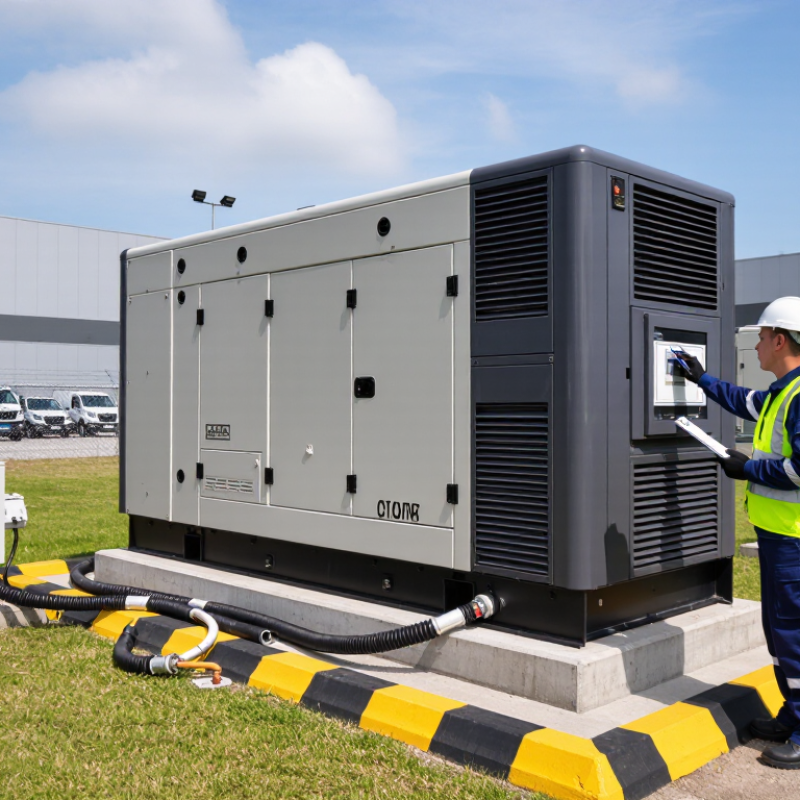
A China standby generator is a backup power system manufactured in China. It stays idle while utility power serves the building. During an outage, an automatic transfer switch detects voltage loss. The switch signals the generator controller to start the engine. Within seconds, the alternator produces electricity for selected circuits. The transfer switch then moves the load from the grid to the generator. Most commercial units use diesel engines, though gas models suit some sites. The engine drives an alternator, while the radiator removes heat. Batteries provide starting power. The controller monitors frequency, voltage, oil pressure, and coolant temperature.
In real installations, sizing requires more than adding appliance wattages. Motors need extra starting current, especially pumps, compressors, and elevators. A qualified technician should measure running loads and calculate transient demand. An undersized unit may trip repeatedly. An oversized unit can wet-stack, waste fuel, and operate poorly. That detail is easy to miss. Buyers should inspect enclosure quality, wiring layout, spare-parts access, and documentation. Ask for factory test records, load-bank testing, efficiency data, and local service arrangements. Check whether the control panel supports remote alarms and scheduled exercise cycles. Noise levels matter near homes, hospitals, and offices.
A weekly no-load start is not enough. The generator should periodically run under meaningful load, because unused engines can develop faults. Filters age even when the machine rarely operates. Field inspections often show that maintenance access affects reliability as much as engine specifications. A well-built unit can still fail when technicians cannot reach a blocked filter. Purchase price also deserves reconsideration. Lower costs may lead to higher fuel use, delayed parts, or difficult servicing.
What Is the Best China Standby Generator for Buyers? - What Is a China Standby Generator and How Does It Work?
| Generator Category |
Typical Prime Power Range |
Common Fuel |
Typical Application |
Automatic Transfer Time |
Typical Noise Level |
Main Buyer Considerations |
| Residential Air-Cooled Standby |
8–26 kW |
Natural gas, LPG, or gasoline |
Homes, small offices, essential household circuits |
Usually 10–30 seconds with an automatic transfer switch |
Approximately 60–75 dB(A) at 7 meters, depending on enclosure and load |
Low installation cost, compact size, simple maintenance, and adequate starting capacity for household loads |
| Residential Liquid-Cooled Standby |
22–60 kW |
Diesel, natural gas, or LPG |
Large homes, farms, small commercial buildings |
Usually 10–30 seconds with a properly sized ATS |
Approximately 65–80 dB(A) at 7 meters |
Better continuous-load capability and cooling performance, but higher purchase and installation costs |
| Commercial Diesel Standby |
50–2,000 kW |
Diesel |
Factories, data rooms, hospitals, hotels, and commercial buildings |
Typically 10–30 seconds; critical systems may require UPS support |
Approximately 65–90 dB(A) at 7 meters before additional acoustic treatment |
High durability, strong motor-starting performance, fuel storage requirements, emissions compliance, and service access |
| Gas-Fueled Commercial Standby |
30–1,000 kW |
Natural gas or LPG |
Commercial buildings, retail facilities, and urban backup systems |
Typically 10–30 seconds with an ATS |
Approximately 60–85 dB(A) at 7 meters |
Cleaner local operation than diesel, but reliability depends on gas supply pressure and availability during emergencies |
| Mobile or Trailer-Mounted Standby |
20–500 kW |
Diesel or gasoline |
Construction sites, temporary facilities, events, and emergency response |
Manual connection or automatic connection depending on the distribution system |
Approximately 70–95 dB(A) at 7 meters |
Mobility, road regulations, fuel-tank capacity, weather protection, and connection safety |
How a Standby Generator Works:
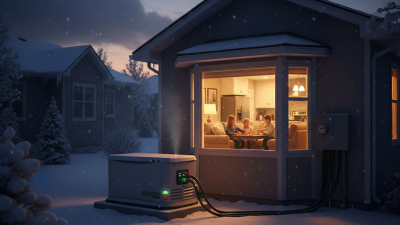
A utility-monitoring controller detects a power failure, starts the engine, and commands the automatic transfer switch to move the electrical load from the utility supply to the generator. When utility power is stable again, the switch transfers the load back and the generator shuts down after a cooling period.
Selection note: The best configuration depends on the calculated running load, motor-starting demand, required backup duration, fuel availability, local voltage and frequency, permitted noise level, environmental regulations, and access to qualified service. Values shown are typical industry ranges and should be confirmed against the specific generator specification and installation conditions.
Which Types of China Standby Generators Are Available?
China standby generators are available in several practical types, each suited to a different risk profile. Diesel generators remain the common choice for factories, hospitals, construction sites, and large buildings. They provide strong starting power and tolerate heavy loads. MarketsandMarkets’ 2024 generator-set report identifies diesel units as the dominant market segment, supported by their durability and broad fuel availability.
Natural-gas generators produce lower local emissions and usually operate more quietly. They suit offices, hotels, and urban facilities with a stable gas connection. However, a damaged gas pipeline can remove the backup option. Dual-fuel generators combine diesel and gas, giving buyers more flexibility during long outages. In remote areas, containerized diesel units are practical because they arrive preassembled and protect internal equipment from dust and rain. Portable units work for smaller loads, but their fuel tanks and output can limit overnight operation.
Tips:
Match the generator type to the load, not only the purchase price. Check motor-starting demand, transfer-switch timing, fuel storage, noise limits, and service access. The International Energy Agency’s Electricity 2024 report expects global data-centre electricity use to more than double by 2030, increasing demand for dependable backup power. Still, bigger is not always better. An oversized generator may run lightly, waste fuel, and require more maintenance. I would test the actual load before ordering, because paper calculations can miss pumps, compressors, and sudden starting surges.
How to Evaluate Generator Power, Fuel Use, and Transfer Systems
Choosing a China standby generator starts with the real load, not the largest nameplate. List pumps, elevators, servers, and lighting separately. Record starting currents, because motors may demand three to seven times their running current. ISO 8528-5 recommends evaluating generator performance under defined load steps and transient conditions. A practical site test should include 25%, 50%, 75%, and 100% loading. Many buyers skip this. That mistake can create voltage dips during a pump start.
Fuel use deserves measured evidence. The U.S. Energy Information Administration estimates diesel contains about 137,000 Btu per gallon. However, generator efficiency changes sharply with load. A lightly loaded engine may burn more fuel per useful kilowatt-hour. Request hourly fuel curves, not one attractive consumption figure. Compare litres per hour at the expected operating load, ambient temperature, and altitude. IEA’s Electricity 2024 report expects global electricity demand to grow strongly through 2026, making fuel planning and outage resilience more important. Still, forecasts cannot replace a site-specific load survey.
The transfer system is equally important. Check automatic transfer-switch rating, switching time, bypass options, and compatibility with sensitive equipment. NFPA 110 describes Type 10 emergency systems that transfer within 10 seconds where the standard applies. Local Chinese electrical requirements may differ. Confirm the governing code with a qualified engineer. Test utility failure, generator start, transfer, retransfer, and cooldown under load. One weakness remains: some quotations specify generator capacity but omit transfer performance, maintenance access, and battery autonomy. That is not a complete comparison.
What Is the Best China Standby Generator for Buyers?
Evaluate generator power, fuel use, and automatic transfer requirements before selecting a standby system.
This reference comparison assumes a 0.8 power factor and operation at 75% rated load. Estimated diesel use is calculated at 0.25 L/kWh, a practical reference value for modern diesel generator operation; actual consumption varies with engine efficiency, load profile, altitude, and maintenance. An automatic transfer switch commonly transfers emergency loads within approximately 10–30 seconds, subject to sensing, start-up, and system configuration.
What Quality, Safety, and Certification Standards Should Buyers Check?
Choosing the best China standby generator begins with checking evidence, not attractive specifications.
Buyers should request certification copies, test reports, and the exact generator model covered.
ISO 9001 can indicate a controlled quality system, while ISO 8528 relates to generating-set performance and testing.
These standards matter, but they do not replace product inspection.
A certificate may cover a factory process rather than every supplied unit.
Safety checks should include emergency-stop operation, fuel-leak protection, grounding, insulation resistance, exhaust routing, and enclosure temperature.
Ask for documented load-bank results at different loads, especially 25%, 50%, 75%, and 100%.
The alternator, engine, controller, and automatic transfer system should be tested together.
Small details matter.
Loose terminals do not inspire confidence.
Certification requirements depend on the destination market.
Buyers may need electrical safety, electromagnetic compatibility, emissions, noise, or local conformity approvals.
Check whether certificates are current, traceable, and issued by an accepted testing body.
Match the serial number and model code carefully.
I have seen paperwork look complete while missing the actual control-panel configuration.
That is a warning sign.
An independent pre-shipment inspection can verify dimensions, labels, wiring, alarms, and operating performance.
Factory photos help, but live testing is stronger evidence.
Also review manuals, spare-parts support, warranty terms, and service response times before payment.
Reliability is more than a clean certificate folder.
How to Choose a Reliable China Standby Generator Supplier?
What Is the Best China Standby Generator for Buyers?
A reliable China standby generator begins with a dependable supplier, not a low quotation. Buyers should examine the supplier’s manufacturing experience, engineering team, and quality-control process. Ask how alternators, engines, control panels, and automatic transfer switches are tested before shipment. A serious supplier should provide clear technical documents, realistic delivery schedules, and traceable production records. Factory photos help, but an independent factory audit offers stronger evidence. Do not rely on polished images alone.
Tips: Request a full load-test report, warranty terms, spare-parts availability, and service response times. Check whether the supplier can customize voltage, frequency, enclosure design, and fuel-tank capacity. Contact recent customers in similar industries. Their practical feedback may reveal problems that sales materials hide.
A dependable supplier also understands installation conditions. Share the site altitude, ambient temperature, humidity, load profile, and required backup duration. The supplier should calculate capacity carefully instead of simply recommending a larger generator. Oversizing can increase fuel use and maintenance costs. Undersizing may cause unstable operation during peak demand. I have seen buyers focus heavily on price and regret ignoring after-sales support. That mistake is understandable, but avoidable. No checklist is perfect. Still, clear communication, documented testing, and accessible technical support create a safer purchasing decision. A supplier willing to explain weaknesses may deserve more trust than one promising flawless performance.