How to Choose the Best Generator Service for Your Needs?
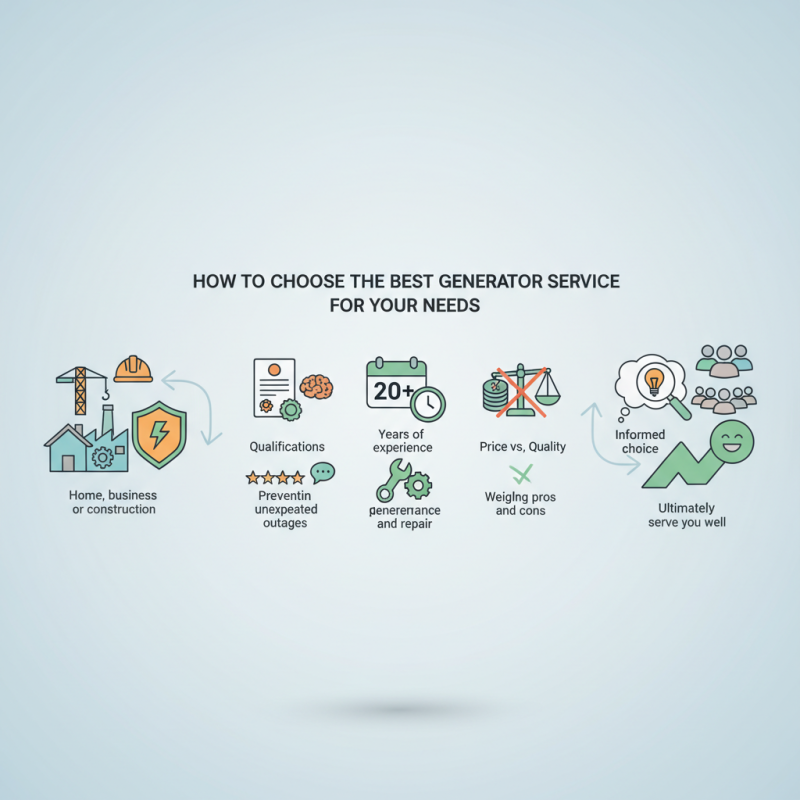
Selecting the right generator service is crucial for ensuring continuous power supply. Whether for home, business, or construction, the choice matters. A reliable generator service can prevent the unexpected outages that disrupt daily life.
Consider your specific needs when evaluating options. Different services provide varying expertise. Check for qualifications, customer reviews, and years of experience. Look for service providers with extensive knowledge in generator maintenance and repair. This expertise builds trust and ensures reliability.
Choosing wisely is often challenging. Price does not always reflect quality. It's essential to weigh the pros and cons carefully. A service that seems affordable may compromise on reliability. Seek out recommendations and weigh your options before deciding. Making an informed choice will ultimately serve you well.
Assessing Your Power Needs: Understanding Wattage Requirements
When selecting a generator service, assessing your power needs is crucial. Understanding wattage requirements ensures you choose a generator that meets your specific demands. According to the U.S. Department of Energy, a standard household requires between 3,000 to 5,000 watts to power essential appliances. However, each home’s needs may vary.
Calculating your wattage starts by listing essential appliances. Add the starting and running wattage for each item. For instance, a refrigerator typically needs about 1,200 watts to start and around 200 watts to run. This detailed approach helps you avoid undersized generators that can lead to performance issues.
**Tip:** Always consider a buffer. Aim for a generator that offers 20% more wattage than your total estimated needs.
Don’t overlook surge wattage, which can be significantly higher for certain appliances. Understanding these variations can ensure a smoother power supply during outages. Inadequate generators may lead to inconvenience and increased costs over time.
**Tip:** Regularly review your wattage requirements, especially when adding new appliances. This practice keeps your power needs in check and avoids potential mishaps.
How to Choose the Best Generator Service for Your Needs? - Assessing Your Power Needs: Understanding Wattage Requirements
| Power Type |
Wattage Requirement (W) |
Recommended Generator Size (kW) |
Usage Duration |
| Home Appliances |
2000 - 5000 |
5 - 8 |
Continuous |
| Construction Tools |
1500 - 6000 |
3 - 10 |
Intermittent |
| RVs and Campers |
1000 - 3000 |
2 - 5 |
Periodic |
| Emergency Backup |
3000 - 8000 |
6 - 10 |
As needed |
| Events and Outdoors |
1000 - 4500 |
2 - 7 |
Occasional |
Types of Generators: Exploring Options for Various Uses
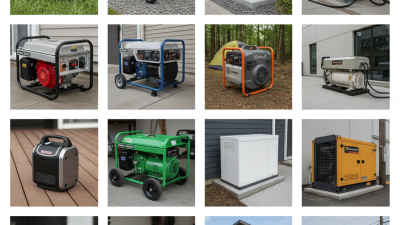
When selecting a generator, understanding the types available is crucial. There are portable generators, standby generators, and inverter generators. Portable generators are ideal for outdoor activities and emergencies. They are lightweight and easy to transport. According to the U.S. Consumer Product Safety Commission, nearly 70% of accidents with generators occur due to improper use. It emphasizes the need for proper knowledge before use.
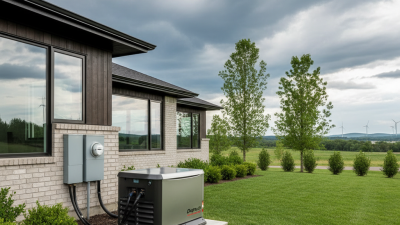
Standby generators offer a different advantage. They provide seamless power during outages. These are permanently installed and can start automatically. Research indicates that up to 90% of homeowners opt for standby generators for residential use in regions prone to power outages. The reliability of a standby generator during crucial times can alleviate stress.
Inverter generators, on the other hand, excel in efficiency and noise reduction. They are often used for sensitive electronics. Reports suggest that they are 50% quieter than traditional models. However, their higher cost may deter some buyers. Assessing personal needs against these types can enhance your selection process. Consider the usage frequency, noise tolerance, and power requirements before making a decision.
Comparing Service Providers: Evaluating Reputation and Experience
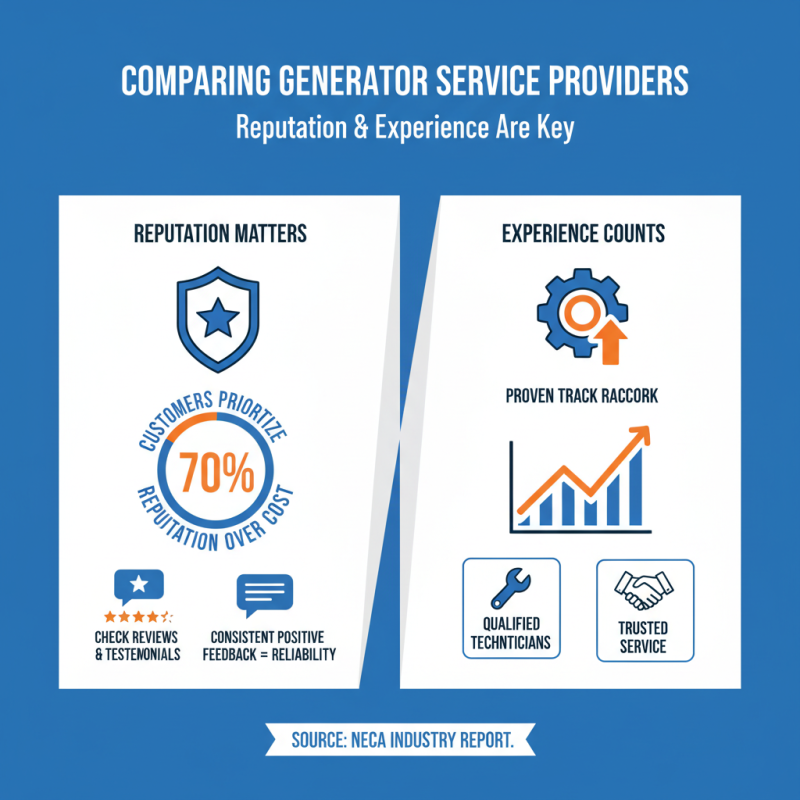
When evaluating generator service providers, reputation and experience are paramount. A recent industry report from the National Electrical Contractors Association (NECA) indicates that 70% of customers prioritize provider reputation over cost. Therefore, looking into customer reviews and testimonials can provide valuable insights. A service provider with consistently positive feedback is often a reliable choice.
Experience also plays a crucial role in this industry. According to a survey by the American Society of Mechanical Engineers (ASME), companies with over ten years in the field tend to perform better. They face fewer service issues and maintain higher customer satisfaction rates. However, newer companies can offer innovative solutions. Assessing a balance between experience and modern capabilities is vital.
In this comparison, one must be cautious of overly optimistic claims. Some providers may exaggerate their experience to gain preference. Always verify their background through trusted sources. Evaluating both current and past projects can uncover insights that ratings alone may not reveal. Each provider has strengths and weaknesses, and understanding these nuances can guide you to a more informed decision.
Analyzing Pricing Structures: Budgeting for Your Generator Service
When budgeting for generator service, understanding pricing structures is critical. Industry reports indicate that generator service costs can vary widely based on location and service type. Routine maintenance might cost around $100 to $300, while emergency repairs can exceed $1,000. These fluctuations often leave customers confused.
Consider the service frequency as well. A biannual maintenance schedule can enhance efficiency and longevity. However, some providers may charge hidden fees for parts or labor. Transparency in pricing is vital. Some reports suggest that 30% of consumers experience unexpected charges during service calls. This emphasizes the need for clarity before committing to a service provider.
It's essential to compare multiple quotes before making a decision. Many consumers find significant price disparities. Research shows that obtaining at least three bids helps identify fair market rates. Understanding these pricing structures will help you make informed decisions. This reflection on cost versus service quality can guide you in selecting a generator service that truly meets your needs.
Generator Service Pricing Comparison
Reading Reviews: Importance of Customer Feedback and Testimonials
Reading reviews is crucial when selecting a generator service. Customer feedback reflects real-world experiences. It provides insights into the reliability of the service. Testimonials can reveal strengths and weaknesses that you may not see otherwise. You may find common themes, such as punctuality or quality of work. Keep an eye out for recurring issues.
Not all reviews are created equal. Some may express experiences that seem exaggerated. A balanced mix of positive and negative feedback is more trustworthy. Look for comments about how a company handled mistakes. This shows their commitment to customer satisfaction. Genuine feedback can help you gauge the expertise and trustworthiness of a service provider.
Consider the source of the reviews. Established platforms often have strict guidelines. This increases the likelihood of truthful accounts. While reading, reflect on your priorities. Do you need fast service or competitive prices? Understanding your own needs helps in interpreting feedback effectively. Not every review will resonate with your situation, so remain critical.