How to Choose an Electrical Generator in 2026?

Choosing an electrical generator in 2026 requires more than comparing engine size and purchase price. Modern buyers must examine load behavior, fuel availability, emissions requirements, noise limits, digital controls, and service support. A generator that starts smoothly may still fail when motors create sudden inrush current.

Nikola Tesla, a pioneering electrical engineer, wrote, “The present is theirs; the future, for which I really worked, is mine.” His words remain relevant because generator selection should consider tomorrow’s energy needs, not only today’s demand. Solar integration, battery storage, remote monitoring, and stricter efficiency expectations are reshaping standby and prime-power systems. The right choice begins with a measured load profile. Record refrigerators, pumps, compressors, medical devices, and sensitive electronics separately. Their starting demands can differ sharply from their running demands.

Small details matter. A 20-kilowatt unit may support normal lighting, yet struggle when a well pump starts. An oversized machine can also operate inefficiently, wasting fuel and increasing maintenance costs. That is easy to overlook.

This guide compares diesel, natural gas, gasoline, and hybrid systems for practical applications. It also considers transfer switches, installation space, runtime, maintenance access, warranty coverage, and local technician availability. Manufacturer claims deserve verification through technical documents and independent service experience. No single electrical generator suits every site. I may favor a cautious sizing approach, but real conditions can expose assumptions. Weather, altitude, fuel quality, and future expansion can change the calculation. A reliable decision balances performance, lifecycle cost, safety, and resilience.
How to Choose an Electrical Generator in 2026?

Define Your Electrical Power Requirements and Operating Conditions

Choosing an electrical generator in 2026 starts with an honest power assessment. List every device, motor, heater, and control system that may operate simultaneously. Record running watts and starting watts from each nameplate. Motors can briefly demand three times their normal current. Measure twice.

Separate essential loads from convenient ones. A refrigeration unit, medical device, pump, or server may require continuous power. Calculate the total running load, then add the largest starting demand. Include a safety margin, usually 15 to 25 percent. An undersized generator may overheat, trip repeatedly, or damage sensitive equipment. An oversized unit can waste fuel and operate poorly at light loads. I have seen both mistakes during site inspections. The first calculation was often too optimistic.

Tips: Check voltage, phase, and frequency requirements before comparing generator ratings. Define whether you need standby, prime, or continuous operation. Note the site’s altitude, temperature, dust, moisture, and ventilation. High elevations and hot weather can reduce available output. Measure the cable distance and confirm voltage drop with a qualified electrician. Consider noise limits, fuel storage, maintenance access, and automatic transfer equipment. Keep a written load schedule, but review it after installation because real operating habits often differ from the original plan.

Compare Generator Types, Fuel Options, and Power Ratings

Choosing an electrical generator in 2026 starts with power ratings, not engine size. List every load, its running watts, and its starting surge. A 2 kW pump may briefly demand 6 kW. Add lighting, refrigeration, and control equipment. Then select a continuous rating above the measured load. Standby ratings suit outages; prime ratings suit repeated, variable operation under ISO 8528 guidance.

Generator type changes performance. Portable units fit short jobs and modest loads. Enclosed standby sets provide automatic transfer and quieter operation. Inverter generators usually deliver cleaner voltage for sensitive electronics, but their capacity can be limited. Diesel offers strong load endurance and easier fuel storage. Natural gas supports fixed installations, while propane can help where pipelines are unavailable. Fuel quality, temperature, ventilation, and local storage rules matter. The U.S. Energy Information Administration continues to identify natural gas as a major electricity fuel, but that does not make it ideal for every site. The best answer is often less obvious.

Tips: Build a load schedule before requesting quotes. Check motor starting current with a clamp meter. Leave 20% headroom. IEA’s Electricity 2024 report estimates data centres used about 460 TWh globally in 2022 and may exceed 1,000 TWh by 2026, highlighting growing backup-power needs. Still, a tidy spreadsheet can miss future expansion. Test the generator under real load, not only during a quiet monthly start.

How to Choose an Electrical Generator in 2026? - Compare Generator Types, Fuel Options, and Power Ratings

Typical specifications are general market ranges. Actual performance depends on load, altitude, temperature, maintenance, and generator configuration.
Generator Type Common Fuel Typical Power Rating Typical Runtime or Fuel Use Best Applications Main Advantages Important Limitations
Portable Inverter Generator Gasoline 1.5–7 kW Approximately 6–18 hours at 25%–50% load, depending on tank size and operating mode Camping, sensitive electronics, small tools, refrigeration, and occasional home backup Low noise, efficient at light loads, compact, and produces stable power with low harmonic distortion Limited output; gasoline storage life is relatively short; usually requires manual setup and refueling
Conventional Portable Generator Gasoline 2–15 kW Approximately 5–14 hours at 50% load; fuel consumption commonly increases to about 0.3–1.2 gal/h as output rises Construction tools, emergency backup, outdoor events, and short-duration residential use Lower purchase cost, simple operation, and good peak output for motor-driven equipment Louder and less fuel-efficient than inverter models; voltage quality may be less suitable for sensitive electronics
Dual-Fuel Portable Generator Gasoline and propane 3–12 kW Gasoline often provides higher output; propane generally offers longer storage life but may reduce rated output by roughly 5%–15% Home emergency backup where fuel availability may vary Fuel flexibility, easier long-term propane storage, and useful backup during gasoline shortages More complex fuel system; propane performance can decline in cold weather or with an undersized supply line
Towable Diesel Generator Diesel 10–200 kW Often 8–24 hours per tank; fuel use commonly ranges from about 0.5 to 12 gal/h depending on rating and load Construction sites, temporary facilities, outdoor events, and commercial backup High durability, strong motor-starting capability, good fuel energy density, and long service life Heavy, noisy, emissions-regulated, and more expensive to transport and maintain
Residential Standby Generator Natural gas or propane 8–26 kW Designed for extended operation while utility fuel is available; natural-gas use commonly ranges from about 100–300 ft³/h Automatic backup for homes, heating systems, refrigerators, pumps, and essential circuits Automatic start, permanent installation, transfer-switch integration, and low user involvement Higher installation cost; natural-gas supply may be interrupted during major disasters; requires periodic servicing
Commercial Standby Generator Diesel, natural gas, or propane 25–500 kW Fuel tanks may support approximately 8–48 hours; larger external tanks can extend operating time Offices, retail facilities, farms, apartment buildings, and critical business loads Automatic operation, scalable distribution, and compatibility with automatic transfer equipment Requires professional design, permitting, ventilation, fuel planning, and scheduled maintenance
Industrial Diesel Generator Diesel 250 kW–3 MW or more Typically configured for extended runtime with bulk fuel storage; consumption varies widely with load and engine size Hospitals, data centers, factories, utilities, and other critical infrastructure High reliability, excellent load acceptance, strong durability, and support for large three-phase loads Highest capital and installation costs; requires emissions controls, specialized service, and substantial space
PTO Generator Tractor diesel fuel 10–150 kW Runtime depends on the tractor fuel tank and tractor engine load Farms and properties that already operate a suitably sized tractor Lower equipment cost, simple mechanical design, and convenient use with existing farm machinery Requires a compatible tractor, correct PTO speed, careful grounding, and manual connection procedures
Power-sizing rule: Choose a generator based on both running watts and starting watts. Add the continuous wattage of the loads that may operate simultaneously, then allow extra capacity for motors, pumps, compressors, and future demand. Avoid operating continuously above approximately 80% of the generator's rated output.

Evaluate Efficiency, Runtime, Noise, and Emissions

How to Choose an Electrical Generator in 2026?

Evaluate Efficiency, Runtime, Noise, and Emissions

When I assess a generator, I begin with the actual load, not the largest number on its label. List refrigerators, pumps, heaters, and sensitive electronics separately. A unit running at 20 percent load may waste fuel and produce unnecessary emissions. Measure startup surge, too. Experience matters.

Runtime depends on fuel capacity, load level, temperature, and maintenance condition. Compare fuel use at 25, 50, and 75 percent load when possible. A 12-hour claim may assume mild weather and half load. Leave room for unexpected demand. I once planned around a published runtime, but cold air and a loaded battery reduced it noticeably. That mistake changed my checklist.

Noise deserves a real-world test, not only a brochure rating. Check the decibel figure, measurement distance, and operating load. A quiet enclosure can restrict airflow if poorly designed. For emissions, verify current certification and fuel requirements in your area. Cleaner combustion is valuable, but it does not replace ventilation. Use clean fuel and inspect the exhaust system regularly. Exhaust must remain outdoors. Maintenance is part of efficiency. Keep records.

Check Safety Features, Installation Needs, and Maintenance

How to Choose an Electrical Generator in 2026?

Safety should guide every generator decision in 2026. The U.S. Consumer Product Safety Commission reported an average of 99 portable-generator carbon monoxide deaths annually from 2011 to 2021. Place the unit outdoors, at least 20 feet from doors, windows, and vents. Keep exhaust directed away from occupied spaces. Install carbon monoxide alarms inside sleeping areas. They can save lives.

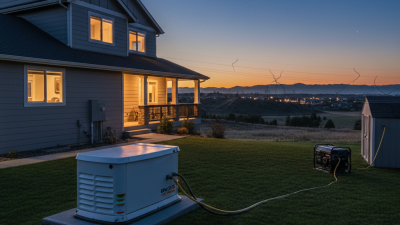
Installation needs deserve equal attention. A qualified electrician should calculate starting loads, inspect the panel, and install an approved transfer switch. Directly connecting a generator to household wiring can backfeed electricity into utility lines. That creates a lethal risk for workers and neighbors. The National Fire Protection Association’s NFPA 110 standard emphasizes reliable emergency power systems, proper transfer equipment, testing, and fuel management. A concrete pad also reduces vibration and keeps the unit above standing water.

Maintenance is often ignored until failure occurs. Follow the service schedule, inspect cables for cracked insulation, and test alarms regularly. Check fuel age, oil level, battery condition, and ventilation before storms arrive. The U.S. Department of Energy notes that maintenance improves equipment efficiency and operating reliability. Still, maintenance plans are not perfect. A monthly test may miss a weak battery or overloaded circuit. Record each inspection, review real household loads, and ask a licensed professional to reassess the system after renovations.

Assess Total Cost, Reliability, and Long-Term Support

Choosing an electrical generator in 2026 requires more than comparing purchase prices.
Total cost includes fuel, installation, servicing, replacement parts, downtime, and disposal. A lower-priced unit may consume more fuel during long outages. Fuel is only one line.

Start with your actual load profile. Record starting currents from pumps, compressors, refrigeration units, and heating equipment. Then compare the generator’s rated output with your measured peak demand. Oversizing can waste fuel, while undersizing may cause overheating and unstable voltage. I have seen operators estimate loads from old invoices, then discover their new equipment needs much more power.

Reliability depends on maintenance access and operating conditions. Check service intervals, enclosure protection, noise limits, cold-start performance, and documented test results. Ask whether trained technicians can arrive quickly and whether critical parts remain available for years. Read the warranty carefully. It may exclude poor fuel quality, neglected servicing, or excessive run hours. Keep a maintenance log with oil changes, battery tests, load-bank results, and fault codes. This creates useful evidence when support is needed. Still, projections can be wrong. Seasonal demand, fuel price changes, and delayed repairs can alter the calculation. Leave room for those uncomfortable surprises.