How to Choose the Best House Generator for Your Home?

Choosing the best house generator starts with your home’s real power needs, not the largest model on the showroom floor. A refrigerator, sump pump, medical device, and heating system can create a very different demand from a few lamps and a television. As generator specialist Rick Bowers explains, “The right generator protects essential circuits without paying for capacity your household rarely uses.” That advice is practical, although every home still requires individual assessment.

Begin by listing the appliances that must remain available during an outage. Note their running watts and starting watts. Motors often need extra power for a few seconds. That small detail can change the recommended size. A 7,500-watt unit may suit a modest home, while larger properties might need 15,000 watts or more. Bigger is not automatically better.

Fuel choice also matters. Natural gas offers convenient, continuous supply, while propane can remain available during some utility interruptions. Portable models usually cost less, but they require outdoor setup, weather protection, and safe cable management. Standby systems start automatically. They also demand professional installation, regular servicing, and a correctly sized transfer switch.

Look closely at noise ratings, warranty terms, cold-weather performance, and maintenance access. A quiet generator beside a bedroom may still disturb sleep. That part is easy to underestimate. Budget for installation, permits, fuel connections, and annual inspections. Some advice online sounds confident but ignores these costs.

The best house generator is not simply the strongest machine. It is the system that matches your electrical panel, climate, fuel supply, and family priorities. Recheck your assumptions before buying. During a blackout, reliability matters more than impressive specifications.
How to Choose the Best House Generator for Your Home?

Calculate Essential Loads Under NEC 220.82 Before Choosing Generator kW

How to Choose the Best House Generator for Your Home?

Calculate Essential Loads Under NEC 220.82 Before Choosing Generator kW

Generator sizing should begin with measured demand, not guesswork. The U.S. Energy Information Administration’s 2020 Residential Energy Consumption Survey reports average household electricity use of about 10,700 kWh annually. That figure is useful for context, but averages hide important peaks. A refrigerator, sump pump, gas furnace blower, and well pump may start together during an outage.

NEC 220.82 provides an optional dwelling-load calculation method. For eligible loads, it applies 100% to the first 10 kVA and 40% to the remainder, subject to its detailed requirements. Treat this as a load-calculation framework, not an automatic generator size. List essential circuits, record running watts, and identify motor starting watts. Then check the largest likely combination. A professional electrician should verify the calculation and transfer equipment. Small errors matter.

Tips: Use appliance nameplate data whenever possible. Add lighting and receptacle loads conservatively. Do not count every household circuit if your goal is backup essentials. The U.S. Department of Energy notes that heating and cooling often dominate residential electricity demand, so an electric resistance heater can quickly change the required kW. A spreadsheet helps, but it can still mislead. Real startup behavior is messy. Leave practical headroom, and reconsider loads that cannot operate together.

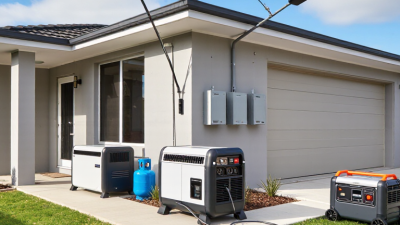
Compare Portable, Inverter, and Standby Designs by Use and Runtime

How to Choose the Best House Generator for Your Home?

The U.S. Energy Information Administration reported about 5.5 hours of outage time per customer in 2023, including major events. That figure makes runtime a practical concern, not a luxury. Portable generators suit short, planned needs, such as running a refrigerator, lights, and a small pump. Their gasoline tanks often require refueling during overnight outages. Inverter generators adjust engine speed with demand. They usually run more quietly and produce cleaner power for sensitive electronics. However, their smaller fuel tanks can limit high-load runtime.

Standby generators work differently. They start automatically when utility power fails and can support larger circuits, including heating or cooling equipment. Their runtime depends on fuel supply, load, and installation quality. A natural-gas connection may offer extended operation, while a propane tank can face capacity limits. NFPA 110 emphasizes regular testing and maintenance for emergency power systems. It is not a “set it and forget it” appliance. I would not choose by wattage alone. Starting loads from pumps and compressors can briefly exceed running loads.

Tips: List essential appliances first. Add their running and starting watts. Test the generator under realistic household load. Keep fuel fresh, inspect oil levels, and provide outdoor clearance. The U.S. Consumer Product Safety Commission warns that portable generators must operate outdoors, far from doors and windows, because carbon monoxide can accumulate quickly. A perfect choice does not exist; quiet operation, runtime, cost, and installation needs will always compete.

How to Choose the Best House Generator for Your Home?

Compare Portable, Inverter, and Standby Designs by Typical Runtime at 50% Load

How to read this chart: Portable generators are suitable for occasional backup and typically run for several hours per fuel tank. Inverter generators are generally more fuel-efficient and quieter, making them useful for sensitive electronics and camping. Standby generators are permanently installed and can operate continuously when connected to a reliable natural-gas or propane supply.

Runtime figures are representative industry estimates at approximately 50% load. Actual runtime varies with generator capacity, load, fuel type, weather, maintenance, and fuel availability.

Choose Fuel by Rated Output, Consumption, and 24-Hour Reserve Needs

How to Choose the Best House Generator for Your Home?

Fuel selection should begin with rated output, not advertising claims. Rated output is the continuous power the generator can deliver safely. Starting output is different. Motors, pumps, and refrigerators can demand several times their running wattage for a few seconds. List essential loads, add their starting demands, and keep a practical margin. Rated output matters.

Fuel energy density changes your reserve calculation. The U.S. Energy Information Administration’s Monthly Energy Review reports approximately 91,452 Btu per gallon for propane and 137,381 Btu per gallon for diesel. Natural gas is measured differently, at about 1,036 Btu per cubic foot. These figures describe fuel energy, not usable electrical energy. Engine efficiency, temperature, maintenance, and load all reduce real output.

Calculate consumption at your expected load, then multiply it by 24 hours. For example, a 10-kilowatt unit using 0.8 gallons hourly at moderate demand needs about 19.2 gallons daily. A 25% reserve raises that figure to 24 gallons. Store more only when local rules, ventilation, and safe handling permit it. The U.S. Department of Energy recommends evaluating actual operating conditions rather than relying on maximum ratings. My first sizing mistake was trusting the nameplate alone. A neat spreadsheet can still mislead. Test the generator under household loads, record fuel use, and revise the reserve estimate after one realistic outage.

Verify Transfer-Switch Compliance with NEC 702.5 and Local Codes

How to Choose the Best House Generator for Your Home?

A reliable home generator begins with a compliant transfer switch, not the generator’s advertised wattage. NEC 702.5 requires transfer equipment to be suitable for the intended use and arranged to prevent unintended connection between utility and generator power. This separation protects utility workers, appliances, and your household wiring. Choose equipment listed for the installation, with ratings matching the generator and connected loads.

Local requirements may add permits, inspection steps, grounding rules, or utility approval. Ask a licensed electrician to review your service panel, load calculations, and neutral configuration. A manual switch may suit a small home, while an automatic switch can restore selected circuits during an outage. Do not assume every “whole-house” setup meets local standards. Even careful planning can miss one detail.

Tips: Request written confirmation that the transfer switch complies with NEC 702.5 and local codes. Confirm whether the switch is service-rated. Check its voltage, amperage, pole configuration, and enclosure rating. Keep the permit and inspection records. Test the system under realistic loads, such as refrigeration, lighting, and a sump pump. A simple test is useful. However, it does not replace professional inspection. Reflection matters here: generator sizing often receives more attention than safe source isolation, although both decisions affect the entire installation.

How to Choose the Best House Generator for Your Home? - Verify Transfer-Switch Compliance with NEC 702.5 and Local Codes

Evaluation Dimension Recommended Data or Range Why It Matters Verification Action
Essential Loads Refrigerator, heating controls, sump pump, well pump, lighting, internet equipment, and selected receptacles A generator should support safety, sanitation, heating, cooling, and essential household functions first. Create a written load list before selecting generator capacity.
Continuous Running Load Add the operating watts of all loads intended to run at the same time. Running watts determine the generator's sustained output requirement. Use equipment nameplates or manufacturer documentation; do not rely only on estimates.
Starting or Locked-Rotor Load Motors such as pumps, compressors, furnaces, and air conditioners may require substantially more power during startup. A generator can overload or trip even when the total running watts appear acceptable. Identify the largest starting load and use the equipment's starting-current data or a qualified load calculation.
Generator Capacity Select a rated output that covers calculated running and starting demands, with a practical reserve. Oversizing can increase cost and fuel consumption; undersizing can cause nuisance shutdowns and equipment stress. Have a licensed electrician confirm the calculation before purchase or installation.
Generator Type Portable, manually connected; portable with a listed inlet and transfer equipment; or permanently installed standby system. The type affects installation method, transfer operation, maintenance, fuel storage, and permitting. Match the generator type to the intended connection method and local electrical requirements.
Transfer Equipment Use a listed transfer switch or other listed transfer equipment suitable for the system voltage, phase, amperage, and generator application. Transfer equipment isolates the premises wiring from the utility supply and helps prevent dangerous backfeed. Check the product listing, installation instructions, ratings, and compatibility with the service or selected-load panel.
NEC 702.5 Compliance Transfer equipment must be suitable for the intended use and installed to prevent inadvertent interconnection of normal and alternate sources. This addresses safe source transfer and reduces the risk of energizing utility lines or damaging equipment. Ask the installer or authority having jurisdiction (AHJ) to confirm compliance with the edition adopted locally.
Neutral and Grounding Arrangement The transfer method may switch the ungrounded conductors only or also switch the neutral, depending on the system design. Incorrect neutral-to-ground bonding or switching can create objectionable current and grounding problems. Require a site-specific review by a qualified electrician; do not assume every generator uses the same neutral configuration.
Service Rating and Panel Compatibility Transfer equipment ratings must match the applicable voltage, phase, ampacity, conductor sizes, and panel configuration. A mismatch can create overheating, improper protection, or an installation that cannot be approved. Compare the main service rating, generator output, breaker ratings, and transfer-switch markings.
Fuel Selection Common options include gasoline, diesel, propane, and natural gas; availability and storage requirements vary by location. Fuel supply reliability, cold-weather performance, storage limits, and delivery arrangements affect outage readiness. Confirm fuel pressure, tank location, ventilation, clearances, and local fire or fuel-storage rules.
Outdoor Installation and Clearances Maintain the clearances, airflow, exhaust direction, and weather protection specified by the installation instructions and local code. Exhaust gases, heat, noise, and restricted airflow can create fire, carbon-monoxide, or equipment hazards. Obtain a site layout review and keep exhaust away from doors, windows, vents, and air intakes.
Local Code and AHJ Approval Requirements may include electrical, building, fire, fuel-gas, noise, zoning, and environmental provisions. The locally adopted code may differ from the current NEC edition or impose additional restrictions. Contact the local building department or AHJ before installation and confirm permit requirements in writing.
Automatic vs. Manual Transfer Automatic transfer starts and transfers loads after qualifying power loss; manual systems require a user-operated procedure. Automatic systems improve convenience, while manual systems may reduce complexity and initial cost. Verify transfer time, startup sequence, load-shedding features, and the required operating procedure.
Maintenance and Testing Follow the engine and transfer-equipment maintenance schedules; exercise standby equipment periodically under an appropriate load. Fuel degradation, discharged batteries, blocked airflow, and neglected oil changes can prevent operation during an outage. Keep service records and test the complete transfer sequence safely according to the installation instructions.
Final Selection Checklist Correct capacity, compatible transfer equipment, listed components, compliant wiring, approved location, suitable fuel, and required permits. A generator is suitable only when the complete system—not just the engine—is safe and code-compliant. Obtain an installation proposal from a qualified electrical contractor and final approval from the AHJ.

Important: NEC requirements are applied through the edition adopted by the local jurisdiction, and local amendments may add requirements. Final generator sizing, transfer-switch selection, grounding, fuel installation, and permitting should be verified by a qualified professional and the authority having jurisdiction.

Check Noise, Emissions, Maintenance Intervals, and Warranty Coverage

How to Choose the Best House Generator for Your Home?

Noise, emissions, maintenance, and warranty coverage deserve more attention than peak wattage.

The World Health Organization’s Environmental Noise Guidelines use 45 dB(A) outdoors at night as a road-traffic benchmark.

A generator is not road traffic, but the comparison is useful. Ask for measured sound levels at several distances, not only an attractive “quiet” label. Stand beside the unit before buying, if possible. Sound changes quickly.

Emissions also require careful checking.

The U.S. Environmental Protection Agency’s emissions standards distinguish engine size, fuel type, and operating conditions. Choose equipment certified for your region, then confirm ventilation and safe exhaust routing with a qualified installer.

NFPA 110 guidance emphasizes regular inspection, testing, and maintenance for emergency power systems. Follow the service schedule closely. Record oil changes, battery tests, filter replacements, and exercise runs.

A neglected generator can fail when the grid fails.

Warranty details matter just as much. Check coverage periods for the engine, controls, battery, labor, and corrosion. Some warranties exclude damage caused by incorrect installation or missed maintenance. Read the exclusions.

I once found the fine print more informative than the sales brochure. That was inconvenient, but useful.