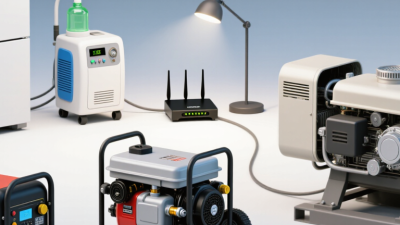
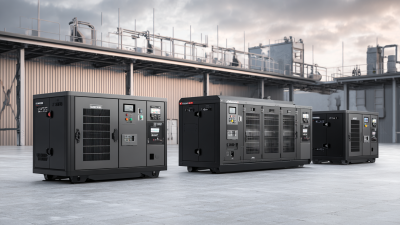
China Top 10 Power Generator Manufacturers 2026?
China’s power generator industry serves construction sites, hospitals, factories, data centers, and remote infrastructure. This guide introduces ten notable Chinese manufacturers for 2026. It focuses on practical evidence, not promotional claims.
The selection considers manufacturing experience, product range, engine partnerships, alternator quality, fuel efficiency, and after-sales support. It also examines factory testing, load-bank procedures, quality systems, and documented compliance with applicable emissions and safety standards. A dependable generator should start smoothly, hold stable voltage, and perform consistently under changing loads. Small details matter, such as control-panel clarity, enclosure durability, spare-parts access, and service response in distant regions.
This is not a permanent ranking. Market positions can change quickly. Public information may also be incomplete or uneven. Some manufacturers publish detailed test data, while others provide limited technical documentation. That difference deserves attention. Buyers should verify certifications, warranty terms, production capacity, and local service arrangements before signing a contract. Site conditions also matter. A quiet hospital backup unit requires different engineering from a rugged mining generator exposed to dust, heat, and vibration.
The following overview offers a balanced starting point for importers, contractors, facility managers, and equipment distributors. It combines industry knowledge with observable product information and realistic purchasing concerns. No single brand fits every project. Careful comparison remains essential.
How China’s Top 10 Power Generator Manufacturers Are Selected in 2026
Selecting China’s top ten power generator manufacturers in 2026 requires more than checking production volume or online visibility. A credible evaluation examines factory experience, engineering capability, product consistency, and documented customer support. Manufacturing sites should show controlled assembly lines, calibrated testing equipment, and traceable component records. Real operating evidence matters too. A generator that starts quickly in a showroom may perform differently under dust, heat, or uneven loads.
The selection process should compare measurable data. Key indicators include fuel consumption, voltage stability, noise control, emissions compliance, overload response, and maintenance intervals. Independent laboratory reports can strengthen technical claims, while third-party inspections help reduce marketing bias. Reviewers should also examine warranty terms, spare-parts availability, technician training, and response times. Small details count, such as clear wiring labels and accessible oil filters.
No ranking is perfectly permanent. Market data changes, and some manufacturers disclose more information than others. That can make a transparent company appear stronger than a less communicative competitor. Factory visits may also represent one production site, not every facility. Therefore, the 2026 selection should combine audits, verified documents, field feedback, and repeated performance tests. A practical scoring model might assign equal attention to reliability, efficiency, safety, service, and long-term value. The final list should explain its evidence, not simply present a polished order.
China’s Leading Power Generator Manufacturers and Their Core Strengths
China’s leading power generator manufacturers serve construction, hospitals, data centers, factories, and emergency facilities. Their core strength is practical engineering at competitive production costs. Many operate integrated workshops for engines, alternators, control panels, and sound-attenuated enclosures. This integration can shorten delivery times and simplify quality checks.
The strongest manufacturers usually offer diesel, natural gas, and hybrid generator systems. Their engineering teams match output capacity with altitude, ambient temperature, fuel quality, and starting requirements. Experienced factories conduct load-bank testing before shipment. They also inspect voltage stability, frequency response, cooling performance, and acoustic levels. These details matter when equipment runs continuously, not only during short outages.
After-sales capability separates reliable suppliers from ordinary exporters. Leading manufacturers maintain technical teams, spare-parts programs, remote monitoring, and regional service partnerships. They can provide wiring diagrams, maintenance schedules, commissioning support, and operator training. Compliance documentation should be clear and traceable, including test records and applicable safety certifications.
Still, no factory is perfect.
A low purchase price may hide limited service coverage or inconsistent component sourcing. Some product pages also promise more than field performance can prove. Buyers should request independent test evidence, reference projects, warranty terms, and realistic delivery conditions. A careful assessment is more valuable than a polished ranking.
Product Ranges, Technologies, and Industries Served by Each Manufacturer
China’s top ten power generator manufacturers cover diesel, natural-gas, hybrid, and battery-supported systems. Their product ranges usually span 10 kVA portable units to multi-megawatt containerized plants. Some focus on construction and agriculture. Others target hospitals, factories, telecom networks, mines, and data centers.
Technology choices separate these manufacturers. Several offer automatic transfer switches, remote monitoring, parallel synchronization, and sound-attenuated enclosures. Higher-end systems may combine gas engines, photovoltaic input, and battery storage. Marine and emergency models require different cooling, corrosion protection, and load-response controls.
The International Energy Agency’s Electricity 2024 report expects global electricity demand to grow by about 4% annually through 2026. That growth strengthens demand for reliable backup power, but fuel efficiency still matters. In practice, a low purchase price can hide expensive maintenance. That point is often underestimated.
Tips: Match kVA to measured starting loads, not average consumption. Ask for fuel-use curves, noise data, service intervals, and emissions documentation.
For data centers, check step-load performance and redundant controls. For remote mines, verify cold-start testing and spare-parts access.
Product brochures can look impressive. Field evidence is better. Testing conditions also vary, so published figures deserve careful review.
Quality Standards, Production Capacity, and Global Market Reach
China’s leading generator manufacturers in 2026 should be judged beyond name recognition. Quality begins with documented testing, not polished brochures. ISO 8528 verifies generator-set performance and rating conditions. ISO 9001 supports traceable production controls, while IEC 60034 covers rotating electrical machines. Strong suppliers also provide load-bank records, factory acceptance tests, and clear emissions documentation. Details matter.
Production capacity remains important for hospitals, data centers, construction sites, and emergency infrastructure. The UNIDO International Yearbook of Industrial Statistics 2024 reported that China produced about 31.6% of global manufacturing value added in 2023. This indicates a deep industrial supply base, but it does not prove generator quality. A large factory can still deliver inconsistent batches. Buyers should inspect engine sourcing, alternator testing, welding quality, and spare-parts inventory.
Global reach requires more than container volume. The IEA Electricity 2025 report forecasts worldwide electricity demand growth of 3.3% in 2025 and 3.7% in 2026. This supports continued demand for reliable backup and prime-power systems. Export-ready manufacturers should offer regional service teams, multilingual manuals, remote monitoring, and locally accepted certifications. Delivery records and response times reveal more than export claims. Some rankings remain imperfect because public data rarely separates generator capacity from wider industrial output.
China Top 10 Power Generator Manufacturers 2026
Quality Standards, Production Capacity, and Global Market Reach
This chart presents a neutral evaluation framework for comparing leading Chinese power-generator manufacturers. The weighting emphasizes quality and compliance systems, manufacturing capacity, and international market readiness. It is a sector-level methodology and does not disclose or rank company-specific data.
How to Compare and Choose a Chinese Generator Manufacturer in 2026
China Top 10 Power Generator Manufacturers 2026?
Choosing a Chinese generator manufacturer in 2026 requires more than comparing prices. Start with the application: standby, prime, construction, data center, or marine support. Ask for verified output at your required voltage, frequency, altitude, and ambient temperature. A generator rated at sea level may perform differently on a hot, high-altitude site.
Request factory audit evidence, production photographs, load-bank test records, and traceable component details. Check whether the manufacturer follows relevant ISO quality systems and can provide destination-market compliance documents. Emissions, electrical safety, noise, and fuel standards vary by country. Never assume one certificate covers every market.
Look closely at the engine, alternator, controller, cooling system, and enclosure. These parts affect reliability more than paint quality. Ask how the unit performs at 25%, 50%, and 100% load. A short factory demonstration is useful, but it cannot replace an independent inspection. This is often overlooked.
Warranty terms should define response time, labor coverage, spare parts, and exclusions. Confirm local service capacity, technician training, and the availability of critical parts. Calculate fuel use, transport, installation, maintenance, and downtime—not only the purchase price. A cheaper quotation can become expensive after one delayed repair.
Communication also matters. Clear drawings and consistent technical answers reveal manufacturing discipline. Some suppliers respond quickly but avoid difficult questions. That should concern you. I would also request references from installations with similar duty cycles, while remembering that references may present only the successful side. A careful comparison leaves room for doubt, testing, and independent verification.